
Mostrando entradas con la etiqueta Congresos. Mostrar todas las entradas
Mostrando entradas con la etiqueta Congresos. Mostrar todas las entradas
lunes, 25 de diciembre de 2023


sábado, 29 de abril de 2023
Dix ans plus tôt
ENN Newsletter VIII 3
3
rd ENN Conference and General Meeting
Emerging
Vectors of Narratology:
Toward
Consolidation or Diversification?
Paris,
March 29-30, 2013
The
3 rd
ENN
conference, held at the Cité internationale universitaire de Paris, was organized
under the auspices of the Center for Research on the Arts and Language (CNRS-EHESS)
by John Pier and Philippe Roussin with support from the City of Paris,
the Ecole des hautes études en sciences sociales, the Institut
Universitaire de
France, the
University of Strasbourg, the University of Tours and the Maison française
d’Oxford. Bringing together some 135 lecturers from 35 countries from Europe
and beyond, it attested not
only to the continuing growth of the ENN (now numbering
more than 560 members) but also to the vitality of narratology in contemporary
research and its interactions with fields beyond literature.
Illustrating the ubiquity of narrative in all modes of cultural expression and demonstrating the flexible, multifaceted research in narratology throughout Europe, the 26 groups of lectures dealt with topics ranging from Narrativity and Visual Media, to Narrative in History, Cinema, Narratology: Method or Heuristics?, Narratology and the Middle Ages, Narrative Borders, Narrative in Cultural Space and more. The six keynote lectures explored new perspectives on narrative sequence (Raphaël Baroni, University of Lausanne), the narratives of natural history (José Ángel García Landa, University of Zaragoza), computational narratology (Jan Christoph Meister, Hamburg University), the “limits of narrativity” (Brian Richardson, University of Maryland), narrativity as a form of representing mental representations (Jean-Marie Schaeffer, EHESS/CNRS) and the relations between contextual and formalist approaches (Dan Shen, Peking University).
The seven panels (Visualizing Narrative Times; Notes Toward
an Embodied Narratology;
When myths become reality: At the crossroads oforganizational
culture, stories, mind; Digital Flânerie and the Mapping of American Narratives of Paris; Translating Narrative Theory;
Narrativity and Intermediality; Metalepsis
out of Bounds) and the two
workshops (What Kind of Narrative Theory for
Musical
Narratology?; Narratology of Greco-Roman Myths and
their Pragmatics)
opened up
new directions for the study of narrative in intermedial and interdisciplinary
contexts. In addition, lectures were also
given by the
24 students who took part in the pre-conference doctoral
seminar.
The
pre-conference doctoral seminar (March 27-28) was directed by Per
Krogh Hansen (University of Southern Denmark) and Wolf Schmid (Hamburg
University). Twenty-four doctoral students attended the
seminar, discussed their research topics
and
gave lectures in special
sessions at the conference.
A selection of articles from the conference will be published in two volumes of the Narratologia series at de Gruyter (Emerging Vectors of Narratology, edited by John Pier and Philippe Roussin, and Paradigms of Narratology, edited by Per Krogh Hansen and Wolf Schmid) and online in a special issue of the Amsterdam International Electronic Journal for Cultural Narratology (AJCN).
In addition, a collection of unedited lectures and articles coming out of the conference will be published on the ENN homepage.
The
complete program of the conference can be accessed by clicking
here. To view a selection of pictures taken at the
conference, click here.
In June videos of the keynote lectures and of several of the parallel sessions will be made available online.
The
ENN Steering Committee
El resumen de mi conferencia, del programa publicado:
José Ángel GARCÍA LANDA , Senior lecturer in English
Department of English and German Philology, University of Zaragoza, Spain garciala@unizar.es
Plenary session III, Room A (March 30, 2013)
The Story behind any Story: Evolution, Historicity, and Narrative Mapping
“The narratives of the world are numberless”; yet, all stories may be seen as chapters of a single story. Evolutionary approaches to literary and cultural phenomena (E. O. Wilson, Joseph Carroll) have led to a growing awareness that these literary and cultural phenomena are best accounted for within a consilient disciplinary framework. From this consilient standpoint, human modes of communication must be contextualized as situated historical phenomena, and
history as such is to be placed within the wider context of the evolution of human societies and of life generally (what is often called “big history”). Using the notions of “narrative mapping” and “narrative anchoring,” the present lecture aims to draw from the aforementioned theoretical outlook a series of conclusions relevant to narratology, in particular to the narratological conceptualization of time. Cultural conceptions of big history underpin the production, the reception and the critical analysis of any specific narrative, as well as any narrativizing strategy, in the sense that these conceptions provide both a general ideational background to the experiences depicted in the narratives, and a mental framework in which to situate (e.g., historicize) the narrative genres used in the depiction.
José Ángel GARCÍA LANDA (MA Brown University, PhD University of Zaragoza) is a senior lecturer in English at the Facultad de Filosofía y Letras, University of Zaragoza. He has coedited the Longman Critical Reader on Narratology (1996)
and the volumes Gender, I-deology (1996) and Theorizing Narrativity (2008). He is the author of Samuel Beckett y la Narración Reflexiva (1992) and of Acción, Relato, Discurso: Estructura de la ficción narrativa (1998). He is the past editor
of Miscelánea: A Journal of English and American Studies and is currently editing A Bibliography of Literary Theory, Criticism and Philology, a free-access online resource.
Aquí está la ponencia en cuestión, completa:
The Story Behind Any Story: The Paris Lecture https://www.academia.edu/11889571/

lunes, 7 de marzo de 2022
El futuro de la radio y la televisión. Periodismo 2030
La prensa en pleno ha encubierto y encubre el piélago de corrupción del EXPEDIENTE ROYUELA, y ha encubierto y encubre la estafa criminal de las vacunas Covid presentándolas como inocuas. Están al servicio del Lambán de turno o de quien sea que organiza el cotarro. ¿Y se preguntan aún de dónde puede venir el descrédito y la desconfianza?
—oOo—
domingo, 14 de noviembre de 2021
(Re)Visiones de lo Fantástico y de lo Insólito
Actas de un simposio, o de tres. Donde me citan en esta ponencia:
Santana Nicácio, Priscila Tenório. "'A tercera porta' da narrativa: O fantástico." In (Re)visôes do Fantástico: Do centro às marges; caminhos cruzados. (II Congreso Internacional Vertentes do Insólito Ficcional – V Encontro Nacional O Insólito como Questâo na Narrativa Ficcional - XIII Painel Reflexoês sobre o Insólito na Narrativa Ficcional). Anais de 2014. Ed. Flavio García, Maria Cristina Batalha, Regina Silvia Michelli. Rio de Janeiro: Dialogarts, 2016. 885-97. Online at Academia.*
https://www.academia.edu/33339614/
2021
—oOo—
jueves, 10 de junio de 2021

viernes, 26 de junio de 2020
Storytelling and Conferences
Artículo donde me citan:
Mendy, John P. (Fac. of Business and Law; U of
Lincoln, jmendy@lincoln.ac.uk) and
Martha Vahl (Fac. of Business and Law, U of Lincoln; mvahl@lincoln.ac.uk). "An
Exploration of the Use of Stories in Research and Organising a
Conference." Systemica (2007): 85-91.*
2020
—oOo—
viernes, 31 de mayo de 2019
Transhuman Enhancement
Nos organizan este bonito simposio en la Facultad, y lo anuncian con muchos carteles de un robotito simpático. Por desgracia no he podido localizar el programa y horario ni en los carteles ni en la red. Lástima, me habría gustado ir.
CALL FOR PAPERS
REPRESENTATION IN THE TIME OF THE POSTHUMAN: TRANSHUMAN ENHANCEMENT IN 21ST CENTURY STORYTELLING
16th International Conference on Contemporary Narratives in English
http://typh.unizar.es/conference/
University of Zaragoza, Spain
May 29-31, 2019
The drive towards personal progress may be considered intrinsic to the human species. Whether intellectual, emotional, spiritual or bodily, perfection –or, less ambitiously, improvement– has always been pursued by different means like education, cultural development, meditation, or physical exercise, to name a few. What seems to have changed in recent decades is the tools available in the race for individual enhancement, given the rapidly evolving fields of science and technology as applied to human desires to enlarge one’s memory and intelligence, lengthen one’s life span, or create genetically stronger and healthier children.
This interest in human progress is key to understand Transhumanism, a cultural and philosophical movement that sees in reason, science and technology the means to overcome human limitations in both our bodies and minds (Bostrom, More, Pearce, Kurzweil). Genetically modified and technologically enhanced humans are transhumans in constant development towards the posthuman, a condition which would radically exceed the capacities of present humans and would entail extreme physiological, genetic and neurological change.
This inherently optimistic movement contrasts with Critical Posthumanism (Badmington, Braidotti, Graham, Hayles, Wolfe, Haraway, Herbrechter), which also sees the human as non-fixed and mutable but which questions anthropocentrism, human exceptionalism and the centrality of the subject in the Anthropocene. They see transhumanism as an intensification of the Enlightenment concept of “Man” as the measure of all things.
The aim of this conference is to explore both how fiction in the Anglo-American sphere has addressed the question of what it means to be human and also how the literary field itself has changed in the time of the 4th industrial revolution (Floridi, Schwab), in which digital information and communication technologies have become essential and in which the analog gives way to the digital.
domingo, 14 de enero de 2018
jueves, 30 de noviembre de 2017
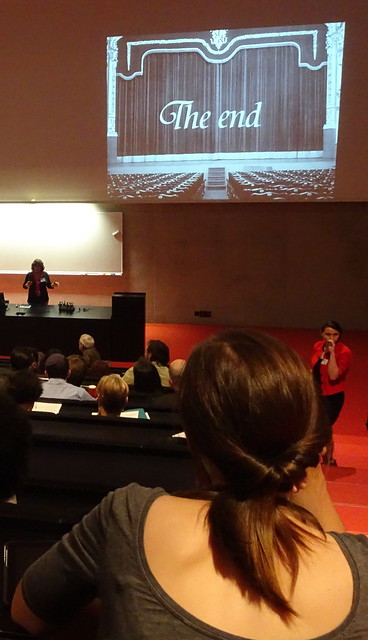
Fotos del congreso de Praga (ENN5)
Aquí la última (¿hasta la fecha?) de mis intervenciones en un congreso internacional, en el 5º Congreso de la European Narratology Network, de Praga, en septiembre pasado.
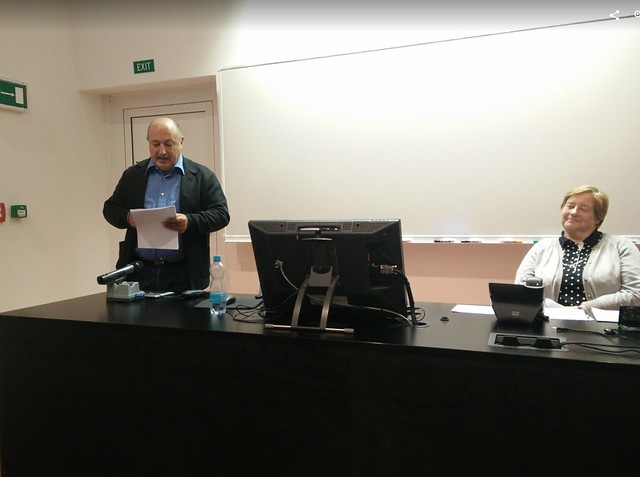
Aquí he encontrado más fotos del congreso.
Aquí he encontrado más fotos del congreso.
—oOo—
viernes, 17 de noviembre de 2017
Retropost #1865 (17 de noviembre de 2007): Closing Time
Closing Time
Publicado en Departamento. com. José Ángel García Landa
Nos echan de la Facultad de Derecho a los últimos supervivientes del congreso sobre "Linguistics and Persuasive Communication", el sábado a la hora de comer—sin tener que recurrir a la violencia. Para un sábado había bastante asistencia—quiero decir que había asistencia; el puñado de congresistas que han aguantado bravamente hasta el final, y algunas al menos de las estudiantes que se habían apuntado. Y poquito más; los vips ya habían mayormente desaparecido, y la mayoría de la gente no había aparecido siquiera—ha habido, desde el principio, una notabilísima ausencia de personal del departamento, no digo ya de la sección literaria, que eso se da por supuesto y viceversa, sino de la propia sección de lingüística que supuestamente organiza este congreso. Los asistentes del departamento, al margen de la misma organización... pues igual cuatro o cinco personas por día (en un departamento de unos cien profesores), y aún exagero. Los estudiantes, también, menos una decena de curiosos intelectuales... tenían mejores cosas que hacer, y eso que para la mayoría de ellos será el único congreso (gratis) al que vayan a ir en su vida. Y al menos en teoría, se organizaban estas cosas de cara a ellos. (Y se suspendían las clases de segundo ciclo para facilitar la asistencia).
Vamos, que no está la cosa para tirar cohetes. Este año nos suprimen la carrera de Filología Inglesa, y visto lo visto parece lo más adecuado. A ver si los Estudios Ingleses que al parecer se van a implantar concitan más interés... porque si no esto es de morirse de la depresión. Lo mismo que te traigas a personas de primera categoría mundial, que los ha habido entre los ponentes—y parecería que es una descortesía ignorarlos. Aún hay que contarlo como un éxito relativo al congreso por su dinámica interna y buen ambiente (menos ese caso de tres ponentes desaparecidos...) y por el interés de las cosas que se han oído. Pero hay que decir que no ha sido entusiasta la participación de los profesores de la Universidad de Zaragoza—to say the least. Están demasiado ocupados trabajando como para ir a un congreso de su especialidad que les organizan en su propia casa. Creo que en general mis colegas son demasiado especialistas—y no les interesa mucho la Filología Inglesa, sólo la especialidad de cada uno dentro de ella.
Por cierto, que una de las ponencias iba sobre comunicación interna unidireccional en las empresas (o universidades) y la importancia de la comunicación bidireccional o multidireccional entre la organización y sus empleados. Expuse el caso de la Universidad de Zaragoza, donde hay un foro para comunicación bidireccional, pero nadie lo utiliza. Respuesta de la ponente: "Pues entonces hay un serio problema"...
Publicado en Departamento. com. José Ángel García Landa
Nos echan de la Facultad de Derecho a los últimos supervivientes del congreso sobre "Linguistics and Persuasive Communication", el sábado a la hora de comer—sin tener que recurrir a la violencia. Para un sábado había bastante asistencia—quiero decir que había asistencia; el puñado de congresistas que han aguantado bravamente hasta el final, y algunas al menos de las estudiantes que se habían apuntado. Y poquito más; los vips ya habían mayormente desaparecido, y la mayoría de la gente no había aparecido siquiera—ha habido, desde el principio, una notabilísima ausencia de personal del departamento, no digo ya de la sección literaria, que eso se da por supuesto y viceversa, sino de la propia sección de lingüística que supuestamente organiza este congreso. Los asistentes del departamento, al margen de la misma organización... pues igual cuatro o cinco personas por día (en un departamento de unos cien profesores), y aún exagero. Los estudiantes, también, menos una decena de curiosos intelectuales... tenían mejores cosas que hacer, y eso que para la mayoría de ellos será el único congreso (gratis) al que vayan a ir en su vida. Y al menos en teoría, se organizaban estas cosas de cara a ellos. (Y se suspendían las clases de segundo ciclo para facilitar la asistencia).
Vamos, que no está la cosa para tirar cohetes. Este año nos suprimen la carrera de Filología Inglesa, y visto lo visto parece lo más adecuado. A ver si los Estudios Ingleses que al parecer se van a implantar concitan más interés... porque si no esto es de morirse de la depresión. Lo mismo que te traigas a personas de primera categoría mundial, que los ha habido entre los ponentes—y parecería que es una descortesía ignorarlos. Aún hay que contarlo como un éxito relativo al congreso por su dinámica interna y buen ambiente (menos ese caso de tres ponentes desaparecidos...) y por el interés de las cosas que se han oído. Pero hay que decir que no ha sido entusiasta la participación de los profesores de la Universidad de Zaragoza—to say the least. Están demasiado ocupados trabajando como para ir a un congreso de su especialidad que les organizan en su propia casa. Creo que en general mis colegas son demasiado especialistas—y no les interesa mucho la Filología Inglesa, sólo la especialidad de cada uno dentro de ella.
Por cierto, que una de las ponencias iba sobre comunicación interna unidireccional en las empresas (o universidades) y la importancia de la comunicación bidireccional o multidireccional entre la organización y sus empleados. Expuse el caso de la Universidad de Zaragoza, donde hay un foro para comunicación bidireccional, pero nadie lo utiliza. Respuesta de la ponente: "Pues entonces hay un serio problema"...
domingo, 12 de noviembre de 2017
Carta a China
Dear Wanlin,
I'm a bit late in my answer but I've been doing homework! Besides, my first semester is really hectic, I concentrate all of my year's teaching there, so the second semester if almost sabbatical in comparison. Well, it's one of the strange things one can do in the Spanish university, and it would suit me perfectly if I were a travelling man, but you see I'm not really that active that way, Prague was an exception! And Beatriz, who's the one who drags me along to conferences, tells me she ("we") won't be going to the Paris conference next semester, so I'm quiet in Spain for the moment. Anyway, thanks for the encouragement to go to China some day, and who knows! John Pier always tells me I should do that, and my sister-in-law, who teaches in Madrid, has also been there several times and she tells me the same. I'm too much of a couch potato academic... or well, a "cyberspace" one if you prefer a more positive and trendy perspective! Pity you can't access some of these repositories from China. Do you use your university's repository, or is there a more general academic platform you use there? I use too many of those perhaps, now (apart from Academia and Researchgate, and SSRN, and well, my university's repository) I have just opened an account at another repository/academic network sponsored by the MLA. Humanities Commons it's called. Well, I'll keep you informed if I find it's worth using. For the time being, I'll just give you one other link, seeing that you can't access the other ones, it's a bit out of date but I'll keep working on it, it's a website at my university with links to some papers and things, here:
http://www.unizar.es/departamentos/filologia_inglesa/garciala/publicaciones.html
or in short here:
http://tinyurl.com/escritos
I'll have to bring it up to date. But it's such time-consuming work, keeping up so many webs, and blogs (six or seven of them) and fixing broken links... Anyway, most of my publications are in Spanish so that's not very helpful. But I did send a couple of weeks ago a handful of offprints with articles in English. Old papers, but anyway :) Most of them you can find in the website above. And then I also sent the narratology book, I waited to see if I could enclose a beautiful postcard of Zaragoza, but I couldn't find it! Postcards have disappeared from the market, or at least from my neighbourhood! The times they are a-changed. Well, I included a tourist brochure anyway, if by chance you decide to join the next Zaragoza conference. My department organizes a conference almost every year on literary and cultural topicis, and film too, in the anglophone area I mean, there are plenty of other conferences in humanities too of course, Zaragoza is pretty active in that respect. I'll send you news on these events as they come along, "j.i.c.". As to journals, our department also publishes a journal, with a horrible name, it's called "Miscellany", with two issues a year, one's in linguistics and language teaching, the other in literature and cultural studies, in English I mean. It's peer-reviewd, published online free-access, it doesn't charge fees to authors (& those horrible things which are getting more and more common!) so it's a pretty good choice if you decide to send papers to a European ("continental") journal. I'll send you a back issue. Another good choice would be the journal of the Spanish Society for Anglo-American Studies, AEDEAN. It's called Atlantis. For some reason the server's down just now 😟 but you can see the contents etc. here: https://dialnet.unirioja.es/servlet/revista?codigo=176 These would be good choices. Well it's not as good as the PMLA or Critical Inquiry, but hey.... Well, I'm leaving you for today. Tell me 2 things - 1, if you do receive this e-mail, I had some trouble last time using gmail and I used my university email system then, and now I don't know which one's best. - 2, in a few weeks' time perhaps, if you do receive TWO separate envelopes, the one with offprints etc., and another one with the Narratology book (the Longman reader, well now it's Routledge I think). I have so little faith in surface mail. And in email too... And I hope you have managed to find some little place at the Montreal conference, you'll be sure to enjoy the trip and get profit from it. By the way, I forgot I Prague I think, to express my admiration for your proficiency in English. That's because I've never seen an Englishman (or Spaniard, or Westerner) proficient in Chinese... maybe they do exist, but not with your level I don't think so! Have you had "extremely long" stays in the USA, or any other English-speaking country, or have you developed in your own department an English-speaking environment, 24/7? Otherwise.... Well, tell me, I'm curious as well as admiring!
And greetings from Zaragoza,
JAGL
I'm a bit late in my answer but I've been doing homework! Besides, my first semester is really hectic, I concentrate all of my year's teaching there, so the second semester if almost sabbatical in comparison. Well, it's one of the strange things one can do in the Spanish university, and it would suit me perfectly if I were a travelling man, but you see I'm not really that active that way, Prague was an exception! And Beatriz, who's the one who drags me along to conferences, tells me she ("we") won't be going to the Paris conference next semester, so I'm quiet in Spain for the moment. Anyway, thanks for the encouragement to go to China some day, and who knows! John Pier always tells me I should do that, and my sister-in-law, who teaches in Madrid, has also been there several times and she tells me the same. I'm too much of a couch potato academic... or well, a "cyberspace" one if you prefer a more positive and trendy perspective! Pity you can't access some of these repositories from China. Do you use your university's repository, or is there a more general academic platform you use there? I use too many of those perhaps, now (apart from Academia and Researchgate, and SSRN, and well, my university's repository) I have just opened an account at another repository/academic network sponsored by the MLA. Humanities Commons it's called. Well, I'll keep you informed if I find it's worth using. For the time being, I'll just give you one other link, seeing that you can't access the other ones, it's a bit out of date but I'll keep working on it, it's a website at my university with links to some papers and things, here:
http://www.unizar.es/departamentos/filologia_inglesa/garciala/publicaciones.html
or in short here:
http://tinyurl.com/escritos
I'll have to bring it up to date. But it's such time-consuming work, keeping up so many webs, and blogs (six or seven of them) and fixing broken links... Anyway, most of my publications are in Spanish so that's not very helpful. But I did send a couple of weeks ago a handful of offprints with articles in English. Old papers, but anyway :) Most of them you can find in the website above. And then I also sent the narratology book, I waited to see if I could enclose a beautiful postcard of Zaragoza, but I couldn't find it! Postcards have disappeared from the market, or at least from my neighbourhood! The times they are a-changed. Well, I included a tourist brochure anyway, if by chance you decide to join the next Zaragoza conference. My department organizes a conference almost every year on literary and cultural topicis, and film too, in the anglophone area I mean, there are plenty of other conferences in humanities too of course, Zaragoza is pretty active in that respect. I'll send you news on these events as they come along, "j.i.c.". As to journals, our department also publishes a journal, with a horrible name, it's called "Miscellany", with two issues a year, one's in linguistics and language teaching, the other in literature and cultural studies, in English I mean. It's peer-reviewd, published online free-access, it doesn't charge fees to authors (& those horrible things which are getting more and more common!) so it's a pretty good choice if you decide to send papers to a European ("continental") journal. I'll send you a back issue. Another good choice would be the journal of the Spanish Society for Anglo-American Studies, AEDEAN. It's called Atlantis. For some reason the server's down just now 😟 but you can see the contents etc. here: https://dialnet.unirioja.es/servlet/revista?codigo=176 These would be good choices. Well it's not as good as the PMLA or Critical Inquiry, but hey.... Well, I'm leaving you for today. Tell me 2 things - 1, if you do receive this e-mail, I had some trouble last time using gmail and I used my university email system then, and now I don't know which one's best. - 2, in a few weeks' time perhaps, if you do receive TWO separate envelopes, the one with offprints etc., and another one with the Narratology book (the Longman reader, well now it's Routledge I think). I have so little faith in surface mail. And in email too... And I hope you have managed to find some little place at the Montreal conference, you'll be sure to enjoy the trip and get profit from it. By the way, I forgot I Prague I think, to express my admiration for your proficiency in English. That's because I've never seen an Englishman (or Spaniard, or Westerner) proficient in Chinese... maybe they do exist, but not with your level I don't think so! Have you had "extremely long" stays in the USA, or any other English-speaking country, or have you developed in your own department an English-speaking environment, 24/7? Otherwise.... Well, tell me, I'm curious as well as admiring!
And greetings from Zaragoza,
JAGL
—oOo—
martes, 7 de noviembre de 2017
viernes, 15 de septiembre de 2017
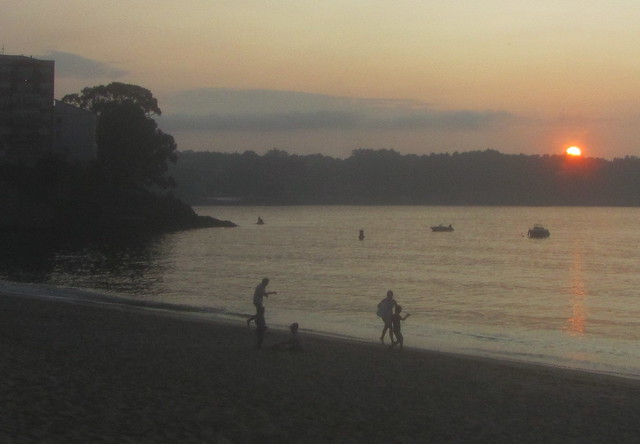
Lejos de esta playa
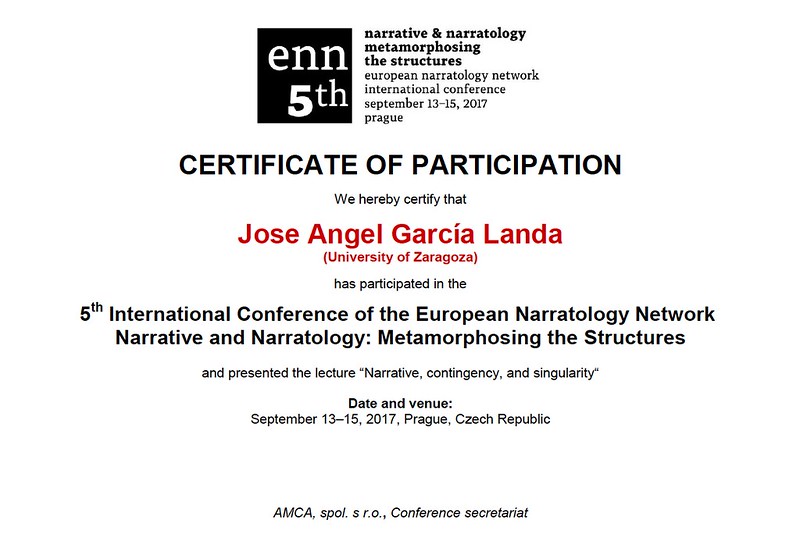
Lejos de estar en esta playa, estoy en Praga, en el 5º congreso de la ENN— y ahí me voy a presentar unas comunicaciones; y esta tarde a hablar sobre narratología evolucionista.
—oOo—
jueves, 14 de septiembre de 2017
Llevo unos días en Praga
Llevo unos días en Praga, una ciudad preciosa, en un congreso
internacional sobre narratología, en el que voy a hablar de un tema
cósmico, "Narración, Contingencia, y Singularidad". Viendo a gente que
tenía apalabrado ver desde hace años, amistades lejanas podrían
volverse, quién sabe, más cercanas, si les diésemos ocasión. Pero no
hay tiempo, no hay ocasión, nos atenemos al ritual establecido del
congreso, es difícil además estar a la altura de nuestro propio autor
implícito, en los congresos. La prueba de que este blog está muerto, y
de que el frío va subiendo, es que ni siquiera me he molestado en
comentar que había venido a Praga, cosa que no me pasa todos los días.
Está claro que he dejado de escribir. Y casi de leer. Y no me he
comprado novela de tema
praguense, ni El Golem, ni El Castillo, ni La Rebelión de las Salamandras. (Ni El Cementerio de Praga,
que ya la tengo pero no me la he leído). Aunque he ido a una librería
llamada Shakespeare e Hijos, esto me recuerda a París, les he dicho a
mis co-congresistas. Ellos viajan más que yo, todos. Me he sacudido en
parte la depre que me traje puesta en el avión, lanzado por las nubes
sin ninguna gana de subir ahí. Los congresos de Small World y de La Septième Fonction du Langage
tienen más drama. Pero éste también tiene drama, de otros géneros, más
realistas y más entre líneas. No sé si volveré a ningún congreso, no sé
ni para qué he venido, el tema del que hablo lo tengo que perfilar más,
y viajes... en fin, recibo mensajes, en los móviles, hasta en los que
no son míos, el de una chica de Praga, llevaba una frase de Star Wars
en las traseras. Está la cosa de tono bajo, para mí ya va siendo closing time me
parece.... y ni siquiera podemos patear bien la ciudad. Me decía una
chinita que me leía en Pekín, y que a ver si nos escribimos. Nos
escribiremos, I guess. Larissa me ha traído una matrioshka desde
Nizhni-Novgorod quizá. Y esta tarde hemos estado en una conferencia de
Marie-Laure Ryan sobre libros con materialidades que se salen del
libro. Luego nos hemos perdido tontamente por el barrio alto, hemos ido
a dar a un teatro de marionetas sin embargo. A la catedral de San Vito
no hemos podido llegar. Mi co-congresista duerme, agotada. Es
medianoche en el hotel, por la ventana se ve el Sheraton. Mañana
retomamos la labor, y el metro de Praga que nos lleva a nuestro destino
y vuelta.
—oOo—
Retropost #1784 (14 de septiembre de 2007): Siempre nos quedará París
Siempre nos quedará París
Publicado en Personales. com. José Ángel García Landa
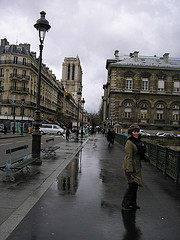
Pero siempre siempre, porque por fin le contestado al colega que me invitaba a dar una conferencia sobre narratología en una École Supérieure des Hautes Études diciéndole que no estoy con ánimos, o ganas, o circunstancias para ir—
Y que muchísimas gracias por invitarme... que era además con todos los gastos pagados.
Así que no se me oirá dar una conferencia en francés y disertar inteligentemente sobre la narración en el cogollito narratológico. Qué se le va a hacer... Lo dejaremos para otra vida posible, o imposible. No llegamos a todo—ni siquiera a una mínima parte de todo lo que me gustaría hacer, en mi caso.
Las causas de la decisión son muchas, pero la de fondo es la confusión que rodea actualmente a lo que vale o no vale la pena hacer en la carrera académica de uno. Cuando le ponen a uno una puntuación de "muy deficiente" en las oposiciones, o le niegan la capacidad de participar en los programas oficiales de estudios su propio departamento, digo. ¿Vale la pena escuernarse para ir haciendo demostraciones de lo mucho que vale uno en realidad? Pues llego a la conclusión de que no.
En cuanto a lo de dar conferencias, nunca lo he disfrutado realmente, aunque creo que sí que se refocilaría mucho el ego dando una en París. Pero otras circunstancias no acompañan, y así pues nos quedaremos en casa tecleando.
Publicado en Personales. com. José Ángel García Landa
Pero siempre siempre, porque por fin le contestado al colega que me invitaba a dar una conferencia sobre narratología en una École Supérieure des Hautes Études diciéndole que no estoy con ánimos, o ganas, o circunstancias para ir—
Y que muchísimas gracias por invitarme... que era además con todos los gastos pagados.
Así que no se me oirá dar una conferencia en francés y disertar inteligentemente sobre la narración en el cogollito narratológico. Qué se le va a hacer... Lo dejaremos para otra vida posible, o imposible. No llegamos a todo—ni siquiera a una mínima parte de todo lo que me gustaría hacer, en mi caso.
Las causas de la decisión son muchas, pero la de fondo es la confusión que rodea actualmente a lo que vale o no vale la pena hacer en la carrera académica de uno. Cuando le ponen a uno una puntuación de "muy deficiente" en las oposiciones, o le niegan la capacidad de participar en los programas oficiales de estudios su propio departamento, digo. ¿Vale la pena escuernarse para ir haciendo demostraciones de lo mucho que vale uno en realidad? Pues llego a la conclusión de que no.
En cuanto a lo de dar conferencias, nunca lo he disfrutado realmente, aunque creo que sí que se refocilaría mucho el ego dando una en París. Pero otras circunstancias no acompañan, y así pues nos quedaremos en casa tecleando.
sábado, 22 de julio de 2017
Dylan & Cohen CFP
Words and Music:
Celebrating the Songs of Dylan and Cohen
From
Sappho to Robert Burns, from Shakespeare to William Blake, the marriage
of words to music in song has been both foundational for the literary as
a category and a problem for literature’s
gatekeepers. Dylan and Cohen came to their words and music by different
routes—Cohen, a prize-winning poet years before he turned to music;
Dylan, a performer of traditional music taken up by the Beat poets.
Dylan wrote some of his best-known lyrics in minutes;
Cohen could write and revise his for long years. Dylan’s intertextual
play ranges from Poe to Raymond Chandler by way of Border ballads and
Ovid; Cohen’s embraces Dante and the Bible. Both are story-tellers: both
are icons as well as bodies of texts and recordings.
To
celebrate the achievements of Bob Dylan and Leonard Cohen, and mark both
Dylan’s Nobel Prize and Cohen’s passing, the Department of Modern
Languages and English Studies at the Universitat
de Barcelona will hold a one-day symposium on 29 September 2017.
Informal papers of interest to both scholars and the general public are
invited—in English, Catalan, or Spanish—on Dylan’s and Cohen’s sources;
their intertextuality; their verse forms; their
use of humour; aging; masculinity; religion; demotic musical and
literary forms; translations of their works; and the transnational and
transcultural Dylan and Cohen.
Proposals of no more than 300 words should be sent by 30 July 2017 to john.stone.bcn@gmail.com. Notifications of acceptance will be issued
by 15 August.
martes, 20 de junio de 2017
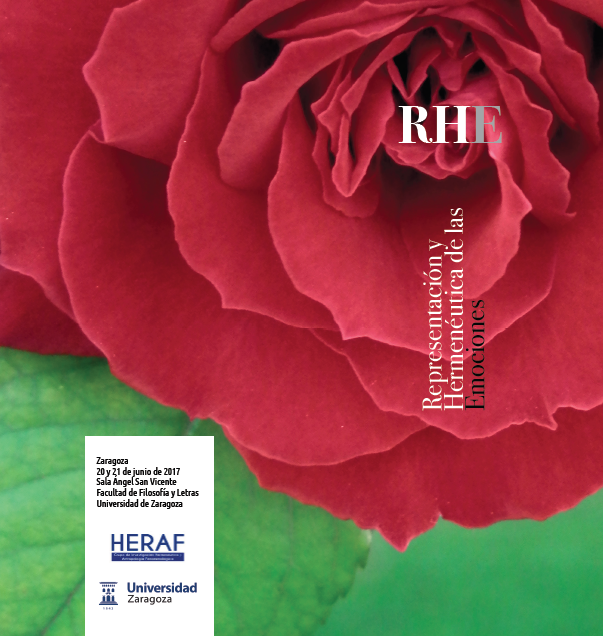
RHE
Jornadas de Investigación
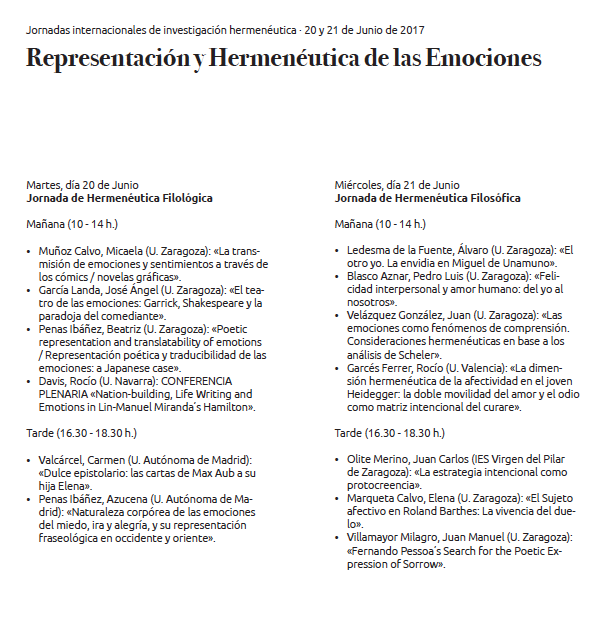
REPRESENTACIÓN Y HERMENÉUTICA DE LAS EMOCIONES
(La última ponencia del programa, sobre Pessoa, no se presentó por fin).
_____
El día 21 estrenamos verano y termina, pequeño pero intenso, el encuentro sobre Representación y Hermeneútica de las Emociones.
Gracias a los participantes de parte de la coorganizadora, que es Beatriz.
REPRESENTACIÓN Y HERMENÉUTICA DE LAS EMOCIONES
Muñoz
Calvo, Micaela. "La transmisión de emociones y sentimientos a través de los
cómics / novelas gráficas." Paper presented at the conference 'Representación
y hermenéutica de las emociones', Universidad de Zaragoza, Facultad de Filosofía
y Letras, 20-21 June 2017.
García
Landa, José Angel. "El teatro de las emociones: Garrick, Shakespeare y la
paradoja del comediante." Paper presented at the conference 'Representación
y hermenéutica de las emociones', Universidad de Zaragoza, Facultad de Filosofía
y Letras, 20-21 June 2017.
Penas
Ibáñez, Beatriz. "Poetic Representation and Translatability of Emotions /
Representación poética y traducibilidad de las emociones: A Japanese
Case." Paper presented at the conference 'Representación y hermenéutica de
las emociones', Universidad de Zaragoza, Facultad de Filosofía y Letras, 20-21
June 2017. (Pound).
Davis,
Rocío. "Nation-Building, Life Writing and Emotions in Lin-Manuel Miranda's
Hamilton." Lecture at the conference
'Representación y hermenéutica de las emociones', Universidad de Zaragoza,
Facultad de Filosofía y Letras, 20-21 June 2017.
Valcárcel,
Carmen. (U Autónoma de Madrid). "Dulce epistolario: Las cartas de Max Aub
a su hija Elena." Paper presented at the conference 'Representación y
hermenéutica de las emociones', Universidad de Zaragoza, Facultad de Filosofía
y Letras, 20-21 June 2017.
Penas
Ibáñez, Azucena. "Naturaleza corpórea de las emociones del miedo, ira y
alegría, y su representación fraseológica en occidente y oriente." Paper
presented at the conference 'Representación y hermenéutica de las emociones', Universidad
de Zaragoza, Facultad de Filosofía y Letras, 20-21 June 2017.
Ledesma
de la Fuente, Álvaro (U de Zaragoza). "El otro yo: La envidia en Miguel de
Unamuno." Paper presented at the conference 'Representación y hermenéutica
de las emociones', Universidad de Zaragoza, Facultad de Filosofía y Letras,
20-21 June 2017.
Blasco
Aznar, Pedro Luis. (U de Zaragoza). "Felicidad interpersonal y amor
humano: Del yo al nosotros." Paper presented at the conference 'Representación
y hermenéutica de las emociones', Universidad de Zaragoza, Facultad de Filosofía
y Letras, 20-21 June 2017.
Velázquez
González, Juan. (U de Zaragoza). "Las emociones como fenómenos de comprensión.
Consideraciones heremenéuticas en base a los análisis de Scheler." Paper
presented at the conference 'Representación y hermenéutica de las emociones', Universidad
de Zaragoza, Facultad de Filosofía y Letras, 20-21 June 2017.
Garcés
Ferrer, Rocío. (U de Valencia). "La dimensión hermenéutica de la
afectividad en el joven Heidegger: La doble movilidad del amor y el odio como
matriz interncional del curare." Paper presented at the conference 'Representación
y hermenéutica de las emociones', Universidad de Zaragoza, Facultad de Filosofía
y Letras, 20-21 June 2017.
Olite
Merino, Juan Carlos. (IES Virgen del Pilar, Zaragoza). "La estrategia
intencional como protocreencia." Paper presented at the conference 'Representación
y hermenéutica de las emociones', Universidad de Zaragoza, Facultad de Filosofía
y Letras, 20-21 June 2017.
Marqueta
Calvo, Elena. (U de Zaragoza). "El Sujeto afectivo en Roland Barthes: La
vivencia del duelo." Paper presented at the conference 'Representación y
hermenéutica de las emociones', Universidad de Zaragoza, Facultad de Filosofía
y Letras, 20-21 June 2017.
(La última ponencia del programa, sobre Pessoa, no se presentó por fin).
_____
El día 21 estrenamos verano y termina, pequeño pero intenso, el encuentro sobre Representación y Hermeneútica de las Emociones.
Gracias a los participantes de parte de la coorganizadora, que es Beatriz.
—oOo—
viernes, 2 de junio de 2017
Samuel Beckett: Literatura y Traducción CFP
JORNADAS INTERNACIONALES.
SAMUEL BECKETT: LITERATURA Y TRADUCCIÓN
UNIVERSIDAD DE EXTREMADURA – CÁCERES FACULTAD DE FILOSOFÍA Y LETRAS 12-13 ABRIL 2018
Samuel Beckett (1906-1989) es un escritor de enorme trascendencia para la literatura tanto irlandesa como universal que ha alcanzado la talla de icono cultural en tiempos recientes. La fama mundial le llegó con Esperando a Godot (1953), una obra escrita en francés que de inmediato él mismo tradujo al inglés, siendo este un patrón que se repetiría a lo largo de su vida. Asimismo, tradujo al francés la mayoría de sus obras escritas en inglés, convirtiéndose, de hecho, en el más importante escritor bilingüe del siglo XX. Se podría decir que el bilingüismo en Beckett alcanza el status de categoría estética: cuando Beckett parecía “fallar de nuevo” sin poder avanzar, el bilingüismo le ofreció la oportunidad de seguir adelante. Escribir en otra lengua, efectivamente, parecía el único avance posible de una literatura encerrada en sí misma. Como resultado de todo este proceso al final de su vida había creado, como señala Sinead Mooney, un canon inestable y complejo, en el cual, desde el final de la Segunda Guerra Mundial en adelante, se hace cada vez más difícil distinguir consistentemente entre el original y su traducción. Beckett era consciente de la enorme importancia del bilingüismo y la autotraducción en su producción literaria y se sabe que ayudó a numerosos traductores de su obra, interesándose vivamente por la forma en que sus novelas y textos teatrales se vertían a otros idiomas.
Sin embargo, a pesar de la relevancia internacional del Premio Nobel de Literatura de 1969, todavía existe en España un relativo desconocimiento de su obra. Estas jornadas tienen como objetivo analizar la presencia de Beckett en la vida cultural española en los últimos sesenta años, con particular atención a las traducciones de su obra al castellano. Si bien prácticamente todas las novelas, obras de teatro y textos en prosa del autor irlandés se encuentran traducidos a nuestro idioma, existe una gran irregularidad en cuanto al estado actual de dichas traducciones. Numerosos textos emblemáticos del autor están descatalogados y otros se encuentran dispersos en ediciones de escasa tirada. Estas jornadas pretenden constituirse en un foro de debate en el que analizar a Beckett en español, de forma que futuros estudios sobre la obra de Beckett en nuestro país puedan fundamentarse en los trabajos que aquí se presenten.
Para las jornadas internacionales Samuel Beckett: Literatura y Traducción se aceptan propuestas de comunicaciones interdisciplinares (en castellano, inglés o francés) sobre los siguientes temas:
-Samuel Beckett y el bilingüismo en su obra.
-Traducciones de Samuel Beckett al castellano y a otros idiomas peninsulares: análisis de casos concretos y estado de la cuestión.
-La recepción de Samuel Beckett en España.
-La censura de la obra de Samuel Beckett en España. -Beckett y la autotraducción de su obra al inglés y al francés. -Corrientes de interpretación de Samuel Beckett.
SAMUEL BECKETT: LITERATURA Y TRADUCCIÓN
UNIVERSIDAD DE EXTREMADURA – CÁCERES FACULTAD DE FILOSOFÍA Y LETRAS 12-13 ABRIL 2018
Samuel Beckett (1906-1989) es un escritor de enorme trascendencia para la literatura tanto irlandesa como universal que ha alcanzado la talla de icono cultural en tiempos recientes. La fama mundial le llegó con Esperando a Godot (1953), una obra escrita en francés que de inmediato él mismo tradujo al inglés, siendo este un patrón que se repetiría a lo largo de su vida. Asimismo, tradujo al francés la mayoría de sus obras escritas en inglés, convirtiéndose, de hecho, en el más importante escritor bilingüe del siglo XX. Se podría decir que el bilingüismo en Beckett alcanza el status de categoría estética: cuando Beckett parecía “fallar de nuevo” sin poder avanzar, el bilingüismo le ofreció la oportunidad de seguir adelante. Escribir en otra lengua, efectivamente, parecía el único avance posible de una literatura encerrada en sí misma. Como resultado de todo este proceso al final de su vida había creado, como señala Sinead Mooney, un canon inestable y complejo, en el cual, desde el final de la Segunda Guerra Mundial en adelante, se hace cada vez más difícil distinguir consistentemente entre el original y su traducción. Beckett era consciente de la enorme importancia del bilingüismo y la autotraducción en su producción literaria y se sabe que ayudó a numerosos traductores de su obra, interesándose vivamente por la forma en que sus novelas y textos teatrales se vertían a otros idiomas.
Sin embargo, a pesar de la relevancia internacional del Premio Nobel de Literatura de 1969, todavía existe en España un relativo desconocimiento de su obra. Estas jornadas tienen como objetivo analizar la presencia de Beckett en la vida cultural española en los últimos sesenta años, con particular atención a las traducciones de su obra al castellano. Si bien prácticamente todas las novelas, obras de teatro y textos en prosa del autor irlandés se encuentran traducidos a nuestro idioma, existe una gran irregularidad en cuanto al estado actual de dichas traducciones. Numerosos textos emblemáticos del autor están descatalogados y otros se encuentran dispersos en ediciones de escasa tirada. Estas jornadas pretenden constituirse en un foro de debate en el que analizar a Beckett en español, de forma que futuros estudios sobre la obra de Beckett en nuestro país puedan fundamentarse en los trabajos que aquí se presenten.
Para las jornadas internacionales Samuel Beckett: Literatura y Traducción se aceptan propuestas de comunicaciones interdisciplinares (en castellano, inglés o francés) sobre los siguientes temas:
-Samuel Beckett y el bilingüismo en su obra.
-Traducciones de Samuel Beckett al castellano y a otros idiomas peninsulares: análisis de casos concretos y estado de la cuestión.
-La recepción de Samuel Beckett en España.
-La censura de la obra de Samuel Beckett en España. -Beckett y la autotraducción de su obra al inglés y al francés. -Corrientes de interpretación de Samuel Beckett.
-Beckett y el pensamiento filosófico.
-Beckett y la exploración de otras formas artísticas.
-Análisis de obras de Samuel Beckett.
Las propuestas de comunicación pueden enviarse por correo electrónico a esta dirección samuel_beckett@unex.es antes del 30 de septiembre de 2017. Deberá incluirse en archivo adjunto el título de la comunicación, un resumen o abstract de 200–300 palabras, el nombre del ponente y la institución a la que pertenece, así como un correo electrónico. El Comité Científico del Congreso valorará las propuestas presentadas y comunicará su aceptación durante el mes de noviembre 2017, para a continuación proceder a abrir el proceso de inscripción.
Ponentes plenarios
Alan Graham (University College Dublin, Irlanda) Nadia Louar (Universidad de Wisconsin, USA) José Francisco Fernández (Universidad de Almería)
Organiza
-Universidad de Extremadura, Cáceres. Facultad de Filosofía y Letras. -Proyecto I+D FFI2016-76477-P (MINECO y AEI/FEDER)
Dirección del congreso
Bernardo Santano Moreno (Universidad de Extremadura)
Comité organizador
Carolina Amador Moreno (Universidad de Extremadura)
Lourdes Carriedo López (Universidad Complutense de Madrid) Nuria Fernández Quesada (Universidad Pablo de Olavide)
José Francisco Fernández Sánchez (Universidad de Almería) María del Carmen Galván Malagón (Universidad de Extremadura) Luis Girón Echevarría (Universidad de Extremadura)
Noelia Plaza Fernández (Universidad de Extremadura)
Olvido Soria Pequeno (Universidad de Extremadura)
Diana Villanueva Romero (Universidad de Extremadura)
Comité científico
Antonio Andrés Ballesteros González (UNED)
María José Carrera de la Red (Universidad de Valladolid) Lourdes Carriedo López (Universidad Complutense de Madrid) Nuria Fernández Quesada (Universidad Pablo de Olavide)
Alan Friedman (University of Texas at Austin)
José Ángel García Landa (Universidad de Zaragoza)
Karine Germoni (Université Paris-Sorbonne)
María Jesús López Sánchez-Vizcaíno (Universidad de Córdoba) François Noudelmann (Université Paris 8)
Bernardo Santano Moreno (Universidad de Extremadura) Pascale Sardin (Université Bordeaux Montaigne, Francia)
Dirk Van Hulle (Universidad de Amberes, Bélgica)
Feargal Whelan (UCD, Irlanda)

-Beckett y la exploración de otras formas artísticas.
-Análisis de obras de Samuel Beckett.
Las propuestas de comunicación pueden enviarse por correo electrónico a esta dirección samuel_beckett@unex.es antes del 30 de septiembre de 2017. Deberá incluirse en archivo adjunto el título de la comunicación, un resumen o abstract de 200–300 palabras, el nombre del ponente y la institución a la que pertenece, así como un correo electrónico. El Comité Científico del Congreso valorará las propuestas presentadas y comunicará su aceptación durante el mes de noviembre 2017, para a continuación proceder a abrir el proceso de inscripción.
Ponentes plenarios
Alan Graham (University College Dublin, Irlanda) Nadia Louar (Universidad de Wisconsin, USA) José Francisco Fernández (Universidad de Almería)
Organiza
-Universidad de Extremadura, Cáceres. Facultad de Filosofía y Letras. -Proyecto I+D FFI2016-76477-P (MINECO y AEI/FEDER)
Dirección del congreso
Bernardo Santano Moreno (Universidad de Extremadura)
Comité organizador
Carolina Amador Moreno (Universidad de Extremadura)
Lourdes Carriedo López (Universidad Complutense de Madrid) Nuria Fernández Quesada (Universidad Pablo de Olavide)
José Francisco Fernández Sánchez (Universidad de Almería) María del Carmen Galván Malagón (Universidad de Extremadura) Luis Girón Echevarría (Universidad de Extremadura)
Noelia Plaza Fernández (Universidad de Extremadura)
Olvido Soria Pequeno (Universidad de Extremadura)
Diana Villanueva Romero (Universidad de Extremadura)
Comité científico
Antonio Andrés Ballesteros González (UNED)
María José Carrera de la Red (Universidad de Valladolid) Lourdes Carriedo López (Universidad Complutense de Madrid) Nuria Fernández Quesada (Universidad Pablo de Olavide)
Alan Friedman (University of Texas at Austin)
José Ángel García Landa (Universidad de Zaragoza)
Karine Germoni (Université Paris-Sorbonne)
María Jesús López Sánchez-Vizcaíno (Universidad de Córdoba) François Noudelmann (Université Paris 8)
Bernardo Santano Moreno (Universidad de Extremadura) Pascale Sardin (Université Bordeaux Montaigne, Francia)
Dirk Van Hulle (Universidad de Amberes, Bélgica)
Feargal Whelan (UCD, Irlanda)
—oOo—
—oOo—
sábado, 6 de mayo de 2017
Retropost #1595 (6 de mayo de 2007): Ontologies of Information Retrieval
Me llega esta col forpeipas, que hago circular: ontología aplicada del information retrieval.
Dear colleagues,
The XII Conference on Information and Documentation Systems (IBERSID 2007, 1-4 October 2007, Zaragoza, Spain)
is open for contributions in English to the special meeting on "Ontologies for information retrieval" (3-4 October 2007). It is entitled: "Ontologies: principles and practice. A challenge and an opportunity for the information and knowledge professional communities".
Please, feel invited to submit either long, short papers, posters or proposals for workshops till 31 May 2007, and extend this invitation to other potentially interested colleagues and partners. Acceptance will be communicated on 4 June. Full papers are expected till the end of June.
The programme and conference information are available at http:// www.ibersid.org. The preliminary programmme for the special "Ontologies for information retrieval" meeting is available at:
http://cicic.unizar.es/ibersid_en/Ediciones/Ibersid2007/programaEN.htm
Best wishes,
Javier García Marco
Universidad de Zaragoza
Ibersid chair
Desde hace tiempo, cuando oigo "ontología" no puedo evitar pensar en "fenomenología" (¿qué ontología hay sin fenomenología?) y cuando oigo fenomenología no puedo evitar pensar en "semiótica" (¿qué fenomenología hay sin semiótica?) y cuando oigo semiótica últimamente se me va la cabeza hacia las tecnologías de manipulación de signos y señales... pero me falta savuag-feg tecnológico. Así que quizá vaya a escuchar todo lo más.
—oOo—
viernes, 21 de abril de 2017
ENN 5
Estoy pensando asistir al 5º Congreso de la European Narrative Network en Praga: http://www.enn5.cz/basic-information/introduction
—más que nada porque ya tengo reservada habitación en Praga para entonces y sería lástima desaprovecharla. ¿Pasaremos antes por Stuttgart, a visitar a Fabiola? Se verá.
El congreso se titula "Narrative & Narratology: Metamorphosing the Structures". Y no sé si me salgo del tema (que después de todo sí hablaré de las metamorforsis de las estructuras) con un artículo sobre narratología evolucionista.
Que ya he pensado el título, y el tema, y poco más hace falta para una ponencia de un cuarto de hora:
"Narrative, Contingency, and Singularity."
Lo debería titular "Contingency, Narrative, and Singularity" para darle un toque rortyiano, pero bah, así se queda. De momento. Luego lo cazo.
Se preguntarán si vale la pena ir a Praga para regurgitar una ponencia de un cuarto de hora (podría parecer decadente). Ante eso tengo dos respuestas: Una, que me aseguran que vale la pena ir a Praga aun sin ponencia. Dos, que como ya he dicho, ya tengo habitación reservada. Tres, que Chequia está a mitad de camino del camino hacia mis amigas rusas, Ludmila y Larissa, que tambien van a ir a Praga. Y hasta Rusia, de momento, no voy a ir.
—más que nada porque ya tengo reservada habitación en Praga para entonces y sería lástima desaprovecharla. ¿Pasaremos antes por Stuttgart, a visitar a Fabiola? Se verá.
El congreso se titula "Narrative & Narratology: Metamorphosing the Structures". Y no sé si me salgo del tema (que después de todo sí hablaré de las metamorforsis de las estructuras) con un artículo sobre narratología evolucionista.
Que ya he pensado el título, y el tema, y poco más hace falta para una ponencia de un cuarto de hora:
"Narrative, Contingency, and Singularity."
Lo debería titular "Contingency, Narrative, and Singularity" para darle un toque rortyiano, pero bah, así se queda. De momento. Luego lo cazo.
Se preguntarán si vale la pena ir a Praga para regurgitar una ponencia de un cuarto de hora (podría parecer decadente). Ante eso tengo dos respuestas: Una, que me aseguran que vale la pena ir a Praga aun sin ponencia. Dos, que como ya he dicho, ya tengo habitación reservada. Tres, que Chequia está a mitad de camino del camino hacia mis amigas rusas, Ludmila y Larissa, que tambien van a ir a Praga. Y hasta Rusia, de momento, no voy a ir.
—oOo—
Suscribirse a:
Entradas (Atom)
Mi fotoblog

se puede ver haciendo clic en la foto ésta de Termineitor. Y hay más enlaces a cosas mías al pie de esta página.
José Angel García Landa
Hace 1 segundo