
sábado, 24 de febrero de 2024


domingo, 10 de abril de 2022
Espíritu de combate y cuentos infantiles
Un comentario a este artículo de The Conversation:
Bloom, Mia (Georgia State U) and Sophia Moskalenko (Georgia State U). "Cómo los cuentos construyen el espíritu de lucha: La diferencia entre los relatos infantiles rusos y ucranianos."
2022
Con artículos como éste, escritos en el ambiente que nos rodea de propaganda y desinformación (especialmente anti-rusa en Occidente) hay que tener especiales precauciones, a la hora de valorarlos. Sin negar que el artículo tenga su interés, y que podría buscarse sustentar esta argumentación con estudios más exhaustivos, estadística, etc., hay que precaver de entrada contra una posible falacia, a saber, la que nos avisa de que "correlación no implica causalidad." El espíritu más combativo de los ucranianos en este conflicto es resultado, sin duda, de muchas causas, y el artículo nos invita a destacar la educación desde la infancia. Ahora bien, hay muchas otras circunstancias que cooperan a ello: el hecho de que los ucranianos estén luchando en su nación y por la supervivencia de su nación, la mayor experiencia en combate de muchos ucranianos, por su servicio militar en zona de conflicto civil (que en Occidente preferimos no enfatizar), la desorientación de los reclutas rusos sobre sus objetivos y sobre la guerra, etc. etc. Hay que evitar la falacia de la causa única.
—oOo—
miércoles, 11 de marzo de 2020
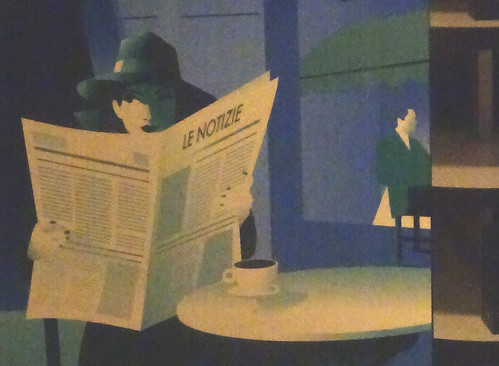
Elogio de los bares
Bares, qué lugares tan gratos para conversar. Antes de Gabinete Caligari, ya lo había destacado William Godwin. Aunque el autor se refiere a "public houses" la mejor traducción hoy sería bar o tasca, mejor que cafetería o pub. Proviene este elogio de los bares de los Thoughts on Man de Godwin (Essay IX, "Of Leisure", p. 187).
One of the scenes to which the leisure of the laborious classes is seen to induce them to resort, is the public-house; and it is inferred that, if their leisure were greater, a greater degree of drunkenness, dissipation and riot would inevitably prevail.
In answer to this anticipation, I would in the first place assert, that the merits and demerits of the public-house are very unjustly rated by the fastidious among the more favoured orders of society.
We ought to consider that the opportunities and amusementsof the lower orders of society are few. They do not frequent coffee-houses; theatres and places of public exhibition are ordinarily too expensive for them; and they cannot engage in rounds of visiting, thus cultivating a private and familiar intercourse with the few whose conversation might be most congenial to them. We certainly bear hard upon persons in this rank of society, if we expect that they should take all the severer labour, and have no periods of unbending and amusement.
But in reality what occurs in the public-house we are too much in the habit of calumniating. If we would visit this scene, we should find it pretty extensively a theatre of eager and earnest discussion. It is here that the ardent and "unwashed artificer," and the sturdy hudbandsman, compare notes and measure wits with each other. It is their arena of intellectual combat, the ludus literarius of their unrefined univerity. It is here they learn to think. Their minds are awakened from the sleep of ignorance, and their attention is turned into a thousand channels of improvement. Thy study the art of speaking, of question, allegation and rejoinder. They fix their thought steadily on the statement that is made, acknowledge its force, or detect its insufficiency. They examine the most interesting topics, and form opinions the result of that examination. They learn maxims of life, and become politicians. They canvas the civil and criminal laws of their country, and learn the value of political liberty. They talk over measures of state, judge of the intentions, sagacity and sincerity of public men, and are likely in time to become in no contemptible degree capable of estimating what modes of conducting national affairs, whether for the preservation of the rights of all, or for the vindication and assertion of justice between man and man, may be expected to be crowned with the greatest success: in a word, they thus become, in the best sense of the word, citizens.
viernes, 22 de enero de 2016
Retropost #562 (21 de octubre de 2005): La FP Empresa-Universidad
No se pierdan por favor no se pierdan este excelente artículo de José Luis Pardo recogido en Fírgoa,
"El futuro de la Universidad Pública"
–que pone en palabras de manera magistral y contundente los muchos aspectos dudosos del programa de reforma universitaria en el que nos vemos embarcados ("nos vemos" porque desde luego los universitarios no hemos tenido opción alguna a opinar sobre su conveniencia, visto que nuestra "representación" en el Consejo de Universidades es totalmente unidireccional y no lleva allí las propuestas de las universidades). José Luis Pardo lo ve como una liquidación de la Universidad Pública, o de la Universidad sin más. Cito un párrafo importante sobre la subordinación de la estructura de las carreras y materias a las fuerxas del mercado, mediante el gambito lateral de enfatizar el "desarrollo de destrezas":
Pero léanselo entero, que vale la pena. También me parece especialmente indicativo lo que dice de los cultural studies como americanización de las disciplinas humanísticas – especialmente pertinente para lo que comentaba aquí hace un par de días sobre el rumbo que parece estar tomando la propuesta de máster de nuestro departamento... enterrando la Filología como cosa obsoleta – http://garciala.blogia.com/2005/101901-which-is-to-be-master.php – y haciendo cosas más "Estudios Ingleses" y más vendibles. Me parece que coincido mucho con esta línea de pensamiento en los artículos que he publicado en este blog sobre la reforma universitaria y los recortes en las titulaciones de Humanidades.. Aquí hay algunos: http://garciala.blogia.com/temas/universidad.php
Por cierto, que no tengo nada contra los estudios culturales, y creo que tienen cabida perfectamente en Filología como también en otras carreras de humanidades... pero otra cosa es que se pretenda liquidar la Filología a cuenta de los cultural studies.
lunes, 9 de diciembre de 2013
Mi fotoblog

se puede ver haciendo clic en la foto ésta de Termineitor. Y hay más enlaces a cosas mías al pie de esta página.