Mostrando entradas con la etiqueta Momentos. Mostrar todas las entradas

martes, 30 de marzo de 2021

The Mind, a Room of One's Own: An Epiphanic Moment in Virginia Woolf

This paper examines in detail an epiphanic moment in Virginia Woolf's 'A Room of One's Own' in the light of George Herbert Mead's social interactionist theory of the mind and of cognition. The epiphanic moment is experienced as an unexpected synthesis of multiple identities and experiences, a conjunction whose very contingency opens up unforeseen possibilities of creative experience. Creativity, openness, unexpectedness, complexity—memorable moments that make the most of this synthesis provide the experience of the subliminal or the unconscious coming to consciousness, and they tend to return to mind and to become milestones in personal development, and in the story of one's relation to oneself. The attention Virginia Woolf pays to the complexity and density of the moment is a tribute both to the present and to the mind—if the mind is to be defined, for the sake of this argument, as the management of emergent complexity, and the present as the locus not just of reality, but of the mental activity that synthesizes it. 

Full text:

The Mind, A Room of One's Own: 

An Epiphanic Moment in Virginia Woolf

https://ssrn.com/abstract=3758808

José Angel García Landa. "The Mind, A Room of One's Own: An Epiphanic Moment in Virginia Woof." In The Fictional Minds of Modernism: Narrative Cognition from Henry James to Christopher Isherwood. Ed. Ricardo Miguel-Alfonso. London: Bloomsbury, 2020.

18 Pages Posted: 3 Mar 2021

Jose Angel Garcia Landa

Universidad de Zaragoza

Date Written: 2019

Abstract


Keywords: Virginia Woolf, Epiphanies, Modernism, Emergence, Cognition, Self, George Herbert Mead, Consciousness, Cognitive Narratology

Garcia Landa, Jose Angel, The Mind, A Room of One's Own: An Epiphanic Moment in Virginia Woolf (2019). José Angel García Landa. "The Mind, A Room of One's Own: An Epiphanic Moment in Virginia Woof." In The Fictional Minds of Modernism: Narrative Cognition from Henry James to Christopher Isherwood. Ed. Ricardo Miguel-Alfonso. London: Bloomsbury, 2020., Available at SSRN: https://ssrn.com/abstract=3758808


 Also in:


eJournal Classifications


CSN Subject Matter eJournals


LIT Subject Matter eJournals


LIT Subject Matter eJournals
    

PRN Subject Matter eJournals


También aquí: 

_____. "The Mind, A Room of One's Own: An Epiphanic Moment in Virginia Woof." In The Fictional Minds of Modernism: Narrative Cognition from Henry James to Christopher Isherwood. Ed. Ricardo Miguel-Alfonso. London: Bloomsbury, 2020. 109-31.*

         https://www.bloomsbury.com/uk/the-fictional-minds-of-modernism-9781501359774/

         2019

_____. "The Mind, A Room of One's Own: An Epiphanic Moment in Virginia Woof." Academia 24 Jan. 2021.*

         https://www.academia.edu/44973104/

         2021

_____. "The Mind, A Room of One's Own: An Epiphanic Moment in Virginia Woof." ResearchGate 1 Feb. 2021.*

DOI: 10.5040/9781501359804.0009

         https://www.researchgate.net/publication/338872722

         2021

_____. "The Mind, A Room of One's Own: An Epiphanic Moment in Virginia Woof." SSRN 3 March 2021.*

         https://papers.ssrn.com/abstract=3758808

         2021

         Cognition & the Arts eJournal 3 March 2021.*

         https://www.ssrn.com/link/Cognition-Arts.html

         2021

         English & Commonwealth Literature eJournal 3 March 2021.*

         https://papers.ssrn.com/sol3/JELJOUR_Results.cfm

         2021

         Women, Gender & Literature eJournal 3 March 2021.*

         https://www.ssrn.com/link/English-Women-Gender-Literature.html

         2021

         Philosophy of Mind eJournal 3 March 2021.*

         https://www.ssrn.com/link/Philosophy-Mind.html

         2021


_____. "The Mind, a Room of One's Own: An Epiphanic Moment in Virginia Woolf." In García Landa, Vanity Fea 30 March 2021.*

         https://vanityfea.blogspot.com/2021/03/the-mind-room-of-ones-own-epiphanic.html

         2021

_____. "The Mind, a Room of One's Own: An Epiphanic Moment in Virginia Woolf." Net Sight de José Angel García Landa 21 Dec. 2022.*

         https://personal.unizar.es/garciala/publicaciones/Woolfthemindaroom.pdf

         2022

_____. "The Mind, a Room of One's Own: An Epiphanic Moment in Virginia Woolf." Knowledge Commons 16 Feb. 2026.*

         https://works.hcommons.org/records/t8c5n-p0044

         2026

 —oOo—


lunes, 23 de julio de 2018

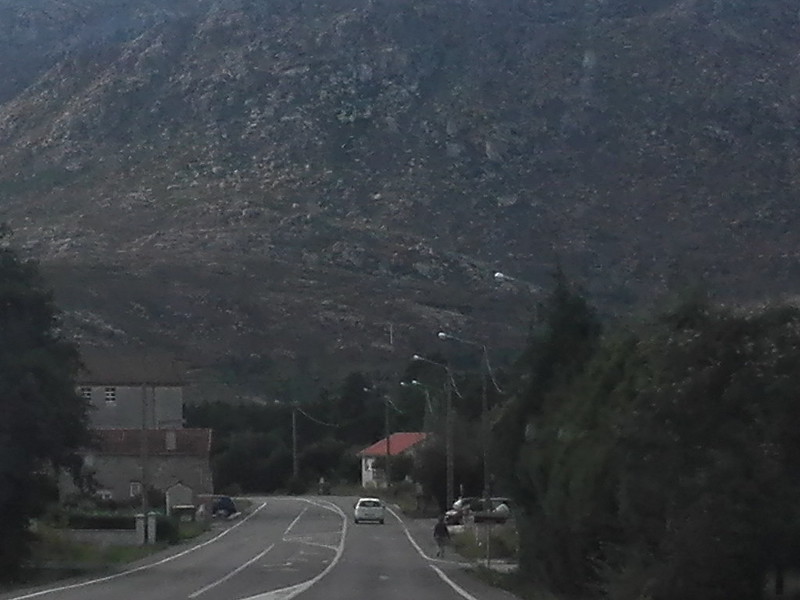
Camino de Finisterre

Camino de Finisterre


Perdí la cámara nueva que me había comprado, y con ella más de tres mil fotos del verano pasado. Entre ellas todas las de la excursión a Finisterre. Algunas quedaron en el teléfono móvil. Todas las fotos, todos los momentos, se perderán como se perdieron estas fotos y estos momentos.  Como lágrimas en la lluvia, ya saben.


—oOo—


—oOo—

miércoles, 31 de diciembre de 2014

Un momento de Virginia Woolf

Un momento de Virginia Woolf

Texto completo:

Un momento de Virginia Woolf 

http://papers.ssrn.com/abstract=2543000


Este artículo es una lectura estilística detallada de un fragmento del ensayo de Virginia Woolf Una habitación propia, examinando la manera en que la autora expresa su teoría de la mente andrógina por medio de los procesos espontáneos de pensamiento de un yo focalizador o "centro de consciencia" durante un momento de "epifanía" modernista.
 
_______

A Moment in Virginia Woolf

Abstract: This article is a close reading of a passage in Virginia Woolf's essay A Room of One's Own, examining the way in which the author expresses her theory of the androgynous mind through the spontaneous thought processes of a moment of epiphany in a "center of consciousness" or focalizing self.

Note: Downloadable document is in Spanish.
Number of Pages in PDF File: 12
Keywords: English literature, Androgyny, Woolf, Virginia Woolf, Epiphany, Gender, Stream of consciousness, Modernism, Moments

Date posted: December 28, 2014  


eJournal Classifications
CSN Subject Matter eJournals


LIT Subject Matter eJournals


_____


También aquí:


_____. "Un momento de Virginia Woolf." In García Landa, Vanity Fea 4 Sept. 2014.*

         http://vanityfea.blogspot.com.es/2014/09/un-momento-de-virginia-woolf.html

         2014

_____. "Un momento de Virginia Woolf." Social Science Research Network 28 Dec. 2014.*

         http://papers.ssrn.com/abstract=2543000

         2014

         Cognition & the Arts eJournal 28 Dec. 2014.*

         http://www.ssrn.com/link/Cognition-Arts.html

         2014

         English & Commonwealth Literature eJournal 28 Dec. 2014.*

         http://www.ssrn.com/link/English-Commonwealth-Lit.html

         2014

_____. "Un momento de Virginia Woolf." In García Landa, Vanity Fea 31 Dec. 2014.*

http://vanityfea.blogspot.com.es/2014/12/un-momento-de-virginia-woolf.html

         2014

_____. "Un momento de Virginia Woolf." Academia 21 April 2015.*

         https://www.academia.edu/12055141/

         2015

_____. "Un momento de Virginia Woolf." ResearchGate 25 Jan. 2016.*

         https://www.researchgate.net/publication/291817442

         2017

_____. "Un momento de Virginia Woolf." Net Sight de José Angel García Landa 4 Jan. 2023.*

         https://personal.unizar.es/garciala/publicaciones/momento.pdf

         2023

_____. "Un momento de Virginia Woolf." Knowledge Commons Works 15 Aug. 2026.*

https://works.hcommons.org/records/r7qg5-rqr66

         2026


—oOo—

jueves, 4 de septiembre de 2014

Un momento de Virginia Woolf


En un examen de literatura inglesa he puesto este texto de Virginia Woolf, un fragmento de A Room of One's Own:

The mind is certainly a very mysterious organ, I reflected, drawing my head in from the window, about which nothing whatever is known, though we depend upon it so completely. Why do I feel that there are severances and oppositions in the mind, as there are strains from obvious causes on the body? What does one mean by 'the unity of the mind', I pondered, for clearly the mind has so great a power of concentrating at any point at any moment that it seems to have no single state of being. It can separate itself from the people in the street, for example, and think of itself as apart from them, at an upper window looking down on them. Or it can think with other people spontaneously, as, for instance, in a crowd waiting to hear some piece of news read out. It can think back through its fathers or through its mothers, as I have said that a woman writing thinks back through her mothers. Again if one is a woman one is often surprised by a sudden splitting off of consciousness, say in walking down Whitehall,* when from being the natural inheritor of that civilization, she becomes, on the contrary, outside of it, alien and critical. Clearly the mind is always altering its focus, and bringing the world into different perspectives. But some of these states of mind seem, even if adopted spontaneously, to be less comfortable than others. In order to keep oneself continuing in them one is unconsciously holding something back, and gradually the repression becomes an effort. But there may be some state of mind in which one could continue without effort because nothing is required to be held back. And this perhaps, I thought, coming in from the window, is one of them. For certainly when I saw the couple get into the taxi-cab the mind felt as if, after being divided, it had come together again in a natural fusion. The obvious reason would be that it is natural for the sexes to co-operate. (…)


Y alguna cosa quiero comentar al respecto, en incisos. Porque me parecen un pasaje, y un momento, muy representativos de Virginia Woolf, eternity in a moment casi:

The mind is certainly a very mysterious organ, I reflected,

Ciertamente reflexivo, lo de reflexionar o reflejar ad infinitum sobre la mente. El órgano (?) seguirá siendo misterioso después de nuestras reflexiones (o las de Woolf)—quizá más misterioso, pues podemos descubrir profundidades o dimensiones insospechadas para quien no se ha parado un momento a reflexionar. Y sin embargo también será más conocido, en algún sentido, taking a new acquaintance of itself observándose en sus procesos, asociaciones, y niveles o planos simultáneos de funcionamiento. Woolf, en su ensayo sobre modern fiction "Mr Bennett and Mrs Brown", ya llamaba la atención sobre esta dimensión extraña de la realidad que se da cuando la examinamos de cerca y descubirmos nuevas dimensiones, sólo por el procedimiento de no someternos a los hábitos de percepción o de representación manidos o habituales. La mancha en la pared es otro magnífico ensayo donde la mente de Woolf observa sus propios procesos, un ensayo a cuenta de nada, podríamos decir, pero es un nada llena de productividad, como el vacío cuántico. Otro ensayo de un momento perdido, con la mente en blanco, por así decirlo, o en blanco palimpsesto. Los momentos indefinidos están llenos de potencialidades y de pensamientos apenas formulados que bullen bajo la superficie vacía, son el equivalente perfecto de la página en blanco, una tentación a la creatividad, o un reto para extraer de ellos lo que nadie veía y ya estaba, sin embargo, allí. En la mente.

drawing my head in from the window,

Esta reflexión tendrá lugar en el momento en que Woolf se retira a la habitación (a room of her own) tras mirar por las ventanas de la percepción a la calle—todo transcurre en ese segundo, un segundo a cámara lenta, denso como los de Joyce, o como esos excursos de Sterne en Tristram Shandy. La habitación es la mente vuelta sobre sí; la ventana es una ventana al mundo, y por ella acaba de ver Virginia Woolf una escena que procederá a alegorizar, o que se ha alegorizado espontáneamnente en su mente, proporcionándole la imagen que necesitaba para aliviar las tensiones que bullían bajo su mente. Un hombre y una mujer entran juntos en un taxi, y el taxi arranca. Desde una ventana, los miraba Virginia Woolf, que ahora vuelve su atención sobre sí.

about which nothing whatever is known, though we depend upon it so completely. 


No es desacertado. Eran los años en que se estaban empezando a formular el psicoanálisis, la fenomenología, la psicología moderna, la neurología, el interaccionismo simbólico de Mead. A la espera de la neurología cognitiva y de la teoría de la mente. Y qué poco se sabe de la mente si se descuentan estas aportaciones. También las percepciones e intuiciones de Woolf merecerán explicación, y aún siguen necesitándola. Decir que dependemos de la mente completamente es, sin embargo, algo un poco chusco. Más acertado sería decir que vivimos en un entorno mental, o que somos entidades mentales antes de ser nada más. Dicho en otro registro, somos cuerpo y alma, pero somos más nuestra alma que nuestro cuerpo. Cuerpo y mente tienen un paralelo sin embargo, y parece apuntar Woolf a una corporeidad de la mente—a ciertas articulaciones o músculos o estructuras que le dan su morfología, y que pueden estar sometidas a tensión o a movimientos forzados:

Why do I feel that there are severances and oppositions in the mind, as there are strains from obvious causes on the body?

Lo nota porque es mujer moderna, viviendo en las tensiones de la modernidad, y la mujer está luchando por un nuevo papel en el espacio público. Por eso escribe Woolf, y para eso necesita su habitación, su espacio. La tensión entre el espacio masculino y el femenino se formula de manera inolvidable en  A Room of One's Own cuando le impiden la entrada a la biblioteca universitaria por ser mujer.  Esta tensión del espacio público la vive Virginia Woolf como una tensión interna (también una tensión en su matrimonio, con su esposo a la vez protector y opresivo). Y esa tensión subyacente, personal y política (the personal is the political, dirán las feministas) ha encontrado una imagen para expresarse, y un alivio, en la imagen de la mujer y el hombre entrando en el taxi, un automóvil que, no lo olvidemos, es un elemento y símbolo de modernidad, mucho más para Woolf que para nosotros.

What does one mean by 'the unity of the mind', I pondered,

Aquí apunta todo un tema modernista, la multiplicidad subyacente al yo—bien teorizada por entonces en la teoría sociológica de los roles que propone el interaccionismo simbólico, de Cooley y de Mead, aunque en la época de Woolf se pensaba más frecuentemente en los términos del psicoanálisis, y las tensiones entre las pulsiones inconscientes y el yo socializado (como hace el Freud de Das Unbehagen in der Kultur, 1929). Quizá la crítica a la unidad de la mente, y su denuncia como una ilusión, encuentre su expresión perfecta en este poema de E. E. Cummings:


so many selves(so many fiends and gods
each greedier than every)is a man
(so easily one in another hides;
yet man can,being all,escape from none)

so huge a tumult is the simplest wish:
so pitiless a massacre the hope
most innocent(so deep’s the mind of flesh
and so awake what waking calls asleep)

so never is most lonely man alone
(his briefest breathing lives some planet’s year,
his longest life’s a heartbeat of some sun;
his least unmotion roams the youngest star)

—how should a fool that calls him “I” presume
to comprehend not numerable whom?

Conservo la tipografía del original en sus detalles, porque para entender este poema en toda su dimensión formal hay que tener en cuenta que Cummings (que solía firmar "e. e. cummings") a veces dejaba de utilizar las mayúsculas desafiando las convenciones ortográficas de la poesía o de la prosa inglesa, como hace en este poema—en el que no es casual que la única mayúscula corresponda al prepotente "Yo", I, que tantas veces era escrito por cummings como un en tono menor. En fin, junto al carácter menor del yo va expresada en este poema su precaria unidad, o su difusión dispersa por todo el universo. Y sin embargo hay un yo, el yo (mayúsculo) de I pondered, del mismo modo que en la deconstrucción del yo pensada por Hume ofendía e irritaba la continua presencia de ese yo sujeto filosófico (y firmante del libro). Un autor tiene que ser un yo, a un cierto nivel, e incluso un punto de vista o voz privilegiados—aunque la disolución o precariedad del yo sean su tema.

for clearly the mind has so great a power of concentrating at any point at any moment that it seems to have no single state of being.

La mente como gestión de la atención, es lo que le llama la atención a Virginia Woolf—y es esa capacidad de concentrar la atención lo que la vuelve multiforme, o le posibilita el acceso a submundos dentro del mundo, o dentro del momento—vuelve el momento, como vemos, en esta frase del texto. La mente plástica, proteica, nos hace vivir en una potencialidad permantente, en una encrucijada de infinitas posibilidades que (por supuesto) apenas habían comenzado a intuirse a la hora de estudiarla. Sobre la capacidad de atención, que ha sido considerada por Tomasello como uno de los componentes básicos de la mente humana, puede leerse más aquí, en "Atención a la atención". Disponiendo de una mente multidimensional, es tanto más importante poder centrar la atención. Este momento de Virginia Woolf es un caso ejemplar de cómo se combinan esos dos aspectos de la mente, su apertura al mundo y su multiplicidad—la ventana—y su capacidad de centrarse en sí y, reflexivamente, transformarse y transformar el mundo, centrando la atención.

It can separate itself from the people in the street, for example, and think of itself as apart from them, at an upper window looking down on them.

En esta frase ya la mente ha reconocido en la escena vivida por Virginia Woolf, asomándose a la ventana, un modelo de su propio funcionamiento. Aunque parecen apuntarse aquí, en realidad, dos fases: la primera, una sensación vivida en ese momento de contemplación a la ventana, donde empezaba a tomar cuerpo la imagen, en la percepción y en la reacción a ella; la segunda, una vez se ha completado el momento de retirarse de la ventana, y volver al escritorio, cuando puede ya expresarse plenamente la sensación de aislamiento vivida, completada por el aislamiento aún más perfecto de la escritora en su habitación, que termina de completar la impresión producida y de perfilar el sentido que se le está dando.


Or it can think with other people spontaneously, as, for instance, in a crowd waiting to hear some piece of news read out.

Somos individuos, y somos sociedad; somos uno y muchos a la vez—the crowd inside—pero en una multitud podemos sentir en gran medida como el resto de la multidud, y (por comunicación, por empatía) sabemos que participamos de lo que viven los demás, y que ellos también están dentro de nosotros pues el mundo comunicativo en que vivimos nos es común al menos en gran medida. Hay un momento de proyeccción empática, de hecho, también en la primera escena que contrasta con esta: la escritora desde la ventana también siente y vive en parte lo que es reunirse con su pareja y subir juntos al taxi. La unión espontánea con los otros, en la experiencia colectiva de la muchedumbre, me hace pensar en el activismo de Virginia Woolf, quizá en sus experiencias anteriores con el movimiento sufragista (recogidas en The Voyage Out)—sin decir nada al respecto, sugiere a un grupo de personas participando de una empresa común y pendientes de una noticia... un momento de participación en la vida de la comunidad que se vivía entonces de modo espacialmente intenso y que puede haber sugerido esta imagen por contraste a la imagen de la mente solitaria asomada a la ventana.

It can think back through its fathers or through its mothers, as I have said that a woman writing thinks back through her mothers.

La experiencia mental no es sólo presente, sino que es una experiencia de viaje en el tiempo, una experiencia de moverse a través de los mundos construidos por la historia y la cultura, y de proyectarse en ellos, viviendo experiencias ajenas a través de la literatura. Una literatura que es ante todo la de la cultura patriarcal, fathers, y muy especialmente Leslie Stephen, alias Mr. Ramsay en To the Lighthouse, hombre de letras y editor nada menos que del Dictionary of National Biography, el registro oficial de los padres de la patria. Y de las madres, claro—porque Virginia estaba especialmente atenta a la tradición femenina soterrada e incluso inventada, como en su historia de la genial Judith Shakespeare en A Room of One's Own. Las feministas anglófonas de una generación posterior, como Ellen Moers en Literary Women, Gilbert y Gubar con The Madwoman in the Attic, o Elaine Showalter en A Literature of Their Own, entroncarán directamente con esta voluntad de "pensar hacia atrás a través de las madres", redescubriendo experiencias y condicionantes, y haciéndose conscientes de ellas en esa reflexión. La escritura de Woolf y textos como éste serán una inspiración potente en esa reflexión, y Virginia Woolf ha resultado ser más feminista de lo que parecía ser, una vez reinterpretada como ella misma sugería.

Again if one is a woman one is often surprised by a sudden splitting off of consciousness,

Atención a la mente y a lo que pasa en ella—cómo se puede dividir contra sí. La experiencia particular de ser una mujer conlleva esas divisiones o tensiones a las que aludía antes el texto, tensiones en la mente—casi una doble personalidad, la heredada de los padres y la de las madres, o la que se descubre en momentos particulares. Porque volvemos a encontrar una alusión al momento, al hecho de que que esa tensión se percibe en momentos concretos—

say in walking down Whitehall,* when from being the natural inheritor of that civilization, she becomes, on the contrary, outside of it, alien and critical.

La mujer como el otro dentro de la civilización, o el otro dentro de sí, porque esta división se vive dentro, no es entre la mujer y la sociedad patriarcal, sino dentro de la mujer misma, un "splitting off of consciousness". Vemos a Virginia cabreada con el rol limitado de la mujer en el espacio público, como sufragista frustrada, viviendo ese descontento como una alteración mental, una esquizofrenia—quizá parte de esas mismas voces que no la dejaban vivir. Hay que recordar que se tiró por una ventana una vez, Virginia Woolf, ya que hablamos de ventanas, y que fueron en parte las voces que oía—alien voices—dentro de sí lo que la hizo decidirse, una vez más, por el suicidio. Es decir, que la separación del espectáculo de la vida no le era una experienica ajena; y como vemos ese sentimiento de alienación iba en gran medida unido a la condición femenina. Fue problemático para Woolf, lo de ser mujer—sexualemnte hablando, parece ser que nunca llegó a aceptarlo, y de ahí en parte sus fantasías lésbicas o transexuales como las que proyectó imaginativamente en Orlando—novela escrita para su amada Vita Sackville-West. No todas las mujeres, quizá, pero poniéndose aquí a sí misma como arquetipo de mujer, la mujer educada y pensante es un elemento inadaptado en la sociedad. Quizá en parte ya por eso de que el pensamiento no puede tomar asiento, pero las tensiones son aquí más potentes—allí en los años 20—y llevan hasta el borde de la patología. Le hacen desear a Virginia una experiencia no traumática, armónica, una existencia sin divisiones como la que proyectó en parte en Orlando o la que consigue imaginar a través de su arte la pintora Lily Briscoe en To the Lighthouse. La imagen de la integración de los opuestos, el elemento masculino y el femenino reconciliados, subiéndose al taxi de la vida, es tentadora, aunque ni su matrimonio ni su experiencia fuesen tan armónicos como ese sueño de integración perfecta.

Clearly the mind is always altering its focus, and bringing the world into different perspectives.

La mente reprsenta el mundo, y así lo constituye, y lo transforma—apuntando aquí la noción de un mundo a modo de relato cinematográfico, o de objeto fotografiable, modelable a través del foco de la atención mental. Sea lo que sea el mundo, el mundo vivido es el resultado de estas perspectivas que le dan una forma particular.

But some of these states of mind seem, even if adopted spontaneously, to be less comfortable than others.

Habla la enferma, la persona sometida a tensiones internas, dolorida por las posturas forzadas de la mente, y que busca ante todo alivio, un posicionamiento menos forzado en el mundo. La cultura patriarcal es a la vez espontánea y forzosa; el orden de los sexos es a la vez espontáneo y forzado. Otro orden también se generaría espontáneamente, en circunstancias distintas.

In order to keep oneself continuing in them one is unconsciously holding something back, and gradually the repression becomes an effort.

Aquí aparece el lenguaje del psicoanálisis; la Virginia que ha pasado por psicoterapia y que se ha hecho consciente del peso de las represiones victorianas que acarrea—la necesidad de modelar su foco de atención y el mundo en que vive para aliviar las tensiones impuestas a la mente. Quizá para hacerse consciente de cosas que ahora no puede ni pensar con claridad, porque obviamente estas tensiones mentales impiden enfocar con claridad las cuestiones.

But there may be some state of mind in which one could continue without effort because nothing is required to be held back.

Aquí apunta la utopía—un estado de mente sin tensiones (quizá una vez trascendido el orden sexual, lo cual nos llevaría más allá de la evolución o al fin de la evolución...). Es una utopía que quizá no ordene nunca el orden social, pero que sin embargo existe, en tanto que utopía—y en tanto que experiencia vivida, crucialmente: no en una vida, sino apuntando en momentos concretos. Un orden utópico que aparece como un estado de mente, quizá para nunca realizarse más que como tal, pero ya es algo, pues es una realidad en la que se ha habitado, y como decía Hamlet, nada es bueno ni malo si no es que nuestra mente así lo juzga, una mente que construye sus propios mundos y cárceles mentales (the mind-forg'd manacles, que decía Blake). Una mente que puede construir también su habitación propia en la que refugiarse, y su utopía.

And this perhaps, I thought, coming in from the window, is one of them.

Este momento. Un punto culminante del pasaje está aquí: en hacerse consciente del momento, del presente —the present, the gift— porque vemos ahora más claro que todo este stream of consciousness ha tenido lugar en un momento intenso. ¿O no? Está el momento, y está su reelaboración en el pensamiento, la reflexión sobre el momento, que también (como hemos dicho antes) se echa de ver en la escritura de este pasaje, sobre un momento tanto vivido y experimentado como recreado y explorado con el pensamiento.

For certainly when I saw the couple get into the taxi-cab the mind felt as if, after being divided, it had come together again in a natural fusion.

Un alivio percibido, y experimentado más conscientemente al reflexionar sobre él y convertirlo en una cierta alegoría. El elemento masculino y el femenino, reconciliados, y partiendo en el taxi a seguir el viaje de la vida. Tal vez, también, un matrimonio con éxito, que no se diferencia aquí de la integración satisfactoria y no represiva de los principios masculinos y femeninos.

The obvious reason would be that it is natural for the sexes to co-operate. (…)

Y reaparece la naturaleza. Pero esa naturaleza, mediada y distorsionada por la cultura, no dicta exactamente en qué manera han de estructurarse, cooperar, o repartirse los papeles los sexos. Llevamos toda la historia, y la evolución, a cuestas, a la hora de redistribuir estos papeles. Y siempre es un dilema, porque también parece obvio que la cultura no está en flotación libre por encima de la historia, ni de la naturaleza. Reaparece ésta, lo natural, en esta línea donde dejamos el texto. No todas las distribuciones de roles —internos y externos— serán igual de naturales, y hemos visto los peligros y tensiones que generan las distribuciones antinaturales. Materia para seguir pensando, cuál es la cooperación natural de los sexos, dentro de la mente, y en la sociedad. Tema para tratar, quizá, en otro momento.

______

* Whitehall, la sede del poder político en Londres.


—oOo—

miércoles, 14 de noviembre de 2012

Exquisite moments

Notes on an article by Kate Haffey published in Narrative 18.2 (2010):

"Exquisite Moments and the Temporality of the Kiss in Mrs. Dalloway and The Hours."

"
More than thirty years after it occurred, Clarissa Dalloway still remembers the kiss between herself and Sally Seton as 'the most exquisite moment of her whole life' (Woolf 35). In scholarship on Mrs. Dalloway, this moment has most commonly been read as evidence of a repressed lesbian identity or dismissed as representing the innocence of childhood friendship. More recently, however, the kiss between Sally and Clarissa has sparked conversation among queer theorists regarding its relationship to temporality."


"The queer moment, as constructed by Sedgwick, is thus able to disrupt the progressive temporality that insists individuals move linearly through a set of life-stages." (144).

"Like Sedgwick's text, Mrs. Dalloway  also enacts a temporality in which Clarissa is able to transcend the divide between her adolescent and her adult selves. Because of this, I am suggesting that we read the moments between Clarissa and Sally as 'queer moments', as moments that disrupt the common distinctions between adolescence and manhood, as moments that make nonsense of the developmental narratives that critics try to impose on them" (144).

"Mrs. Dalloway is a text that itself insists on the power of moments" (144)

"The difference between these two positions in time has momentarily dissolved, and the adult and the child exist simultaneously" (145)

"In her adult life, Clarissa carries with her the 'present' that Sally has given her. The 'religious feeling' associated with this relationship is sometimes able to burn through the layers of time ("the radiance burnt through").

"Clarissa feels 'somehow very like him—the young man who had killed himself', and 'she felt glad that he had done it' (186). Clarissa's gladness seems to be centered on the fact that Septimus would plunge to his death rather than give up his 'treasure'. She understands the desire to die in order to preserve something 'exquisite'. Clarissa's way of preserving this 'treasure', however, is quite different from Septimus's" (146).

"Clarissa thus married Richard because he allows for space, both mental and physical. She does not marry him to join herself emotionally to someone else, but to preserve a space for herself" [A Room of one's own]. By Clarissa's fiftieth year, she is sleeping in a narrow bed in her own room in the attic" (147).

"This 'thing . . . that mattered', this thing that Septimus 'had preserved', is 'his treasure'—that thing without which life is not worth living (184). Could 'it' also be what Clarissa finds 'with a shock of delight, as the sun rose, as the day sank" (185), the treasure of her youth, her 'present'—that exquisite kiss with Sally—that Clarissa has been holding onto for all these years?" (148).

"This is not a text about moving from the past into the future, but rather one about the preservation of the past in the present." (149).

"For Clarissa, then, it is this 'present', this kiss with Sally, that remains, that returns to disrupt linear narratives of development. It is a moment of queer temporality; it hangs between life and death, between youth and adulthood, and crashes through all the barriers meant to keep the past and the present separate" (149).

"Woolf is able to present a queer temporality that disrupts and questions traditional forms of narration and traditional plots" (149).

Woolf: "I have no time to describe my plans, I should say a good deal about The Hours & my discovery; how I dig out beautiful caves behind my characters; I think that gives exactly what I want; humanity, humour, depth. The idea is that the caves shall connect, and each comes to daylight at the present moment" (149).

"In other parts of her journal, Woolf refers to this method as her 'tunneling process' (Hungerford 164). This tunneling process is the means by which the past ends up side by side with the present in Mrs. Dalloway. Cunningham's prose seems to enact the same process, but his text also attempts to understand the riddle of the 'exquisite moment' as it exists in Woolf's text" (149).

"In this way, The Hours is very much a text about the experience of time, both about the duration of time passing and about the moments that seem to rupture the experience of duration" (150).

"In this way, Cunningham's text is not merely a re-telling of Mrs. Dalloway or a rehashing of its themes; instead, the novel demonstrates exactly what these queer moments make possible—a different relation to the future" (151).

"And like the Clarissa in Woolf's novel, Clarissa Vaughan also has a kiss in her past that often returns to disrupt her present. Her kiss, however, was with Richard, a gay man who is currently her best friend. For Clarissa, it is this kiss that is transgressive and not her relationship with Sally. By switching the gender of these characters, Cunningham is able to more clearly delineate the significance of the kiss. These moments hold such power not because they are same-sex kisses (indeed, one is not) but because they exist outside an imaginable, scripted future. The queer moment disrupts not only hetero-normative time but also homo-normative time. It complicates those temporalities that naturalize the development through conventional life-stages." (152).

From The Hours:

He says, "Here we are. Don't you think?"
"Pardon me?"
"We're middle-aged and we're young lovers standing beside a pond. We're everything, all at once. Isn't it remarkable?"
"Yes." (The Hours 67)


"Echoing lines from Mrs. Dalloway in a different context, Richard's statement positions the kiss as a gateway thorugh which these 'middle-aged' individuals and these 'young lovers' can exist simultaneously. In this way he seems to echo Clarissa Dalloway's visions of herself as both young and old." (153)

"The feeling that 'anything could happen' is a feeling of not knowing the future. And not to know or anticipate the future is to be able to fully occupy the present. In this instant, Clarissa was able to slip out of the normal temporality of her life, of worrying about the future, of trying to makes sense of the present, and fully occupy the moment" (154)

"Indeed, to be in the temporality of everyday life is to anticipate the future based on what one knows about the past. This is the type of temporality that Laura experiences when she talks about 'continuance' (Cunningham 206). It is the belief that the future will be merely a repetition of the past. The moment, however, is able to disrupt this kind of temporality, the temporality of cause and effect, of past projected into the future. For both Clarissa and Kitty, a kiss allows them to occupy the present momentarily and to feel the elation of a future that is on the horizon but is not yet decided" (154-5).

"This does not mean that the moment is outside of narrative, for certainly these moments I have described exist within frames of narrative, but moments disrupt the flow of time in the novel without any definitive teleological purpose. They simply are." (155)

Cunningham: ..."all the vivid, pointless moments that can't be told as stories" (The Hours 132)

Not lyric vs narrative, not the interruption of a lyrical moment before narrative goes on. "Narrative does press on, but the queer moment remains. It is a remnant of a previous time that continues. And in this case, part of what continues on is a relation to an unpredictable future." (155).

Arnold Bennett on Mrs. Dalloway:  "What Bennett's criticisms show is the way in which 'the moment' interferes with and disrupts traditional model of narrative" (158).

In The Hours, "The hours in which 'our lives seem  . . . to burst open and give us everything we've ever imagined' are placed in opposition to the hours that continue relentlessly forward (225). But it is the pleasure of 'an hour here or there' that we hope for 'more than anything'. These are the 'vivid, pointless moments', as Clarissa Vaughan states earlier, 'that can't be told as stories' (132).

"as Woolf and Cunningham have shown, to occupy the moment can also mean recognizing the connection between disparate moments in time and enacting crossings across perceived divides" (159).

"In both texts, the kiss is explored as a kiss rather than as a stop along the way to sex, a climax. The kiss itself partakes of an interesting and strange temporality"; "within queer
 temporality the moment is not merely 'enough'; it is the opening to a future that is not yet decided" (159).


—oOo—

Mi fotoblog

Mi fotoblog
se puede ver haciendo clic en la foto ésta de Termineitor. Y hay más enlaces a cosas mías al pie de esta página.