martes, 9 de diciembre de 2014

SWIFT

From The Oxford Companion to English Literature, ed. Margaret Drabble.


SWIFT, Jonathan (1667-1745), born in Dublin after his father's death. He was son of Jonathan Swift by Abigail (Erick) of Leicester, and grandson of Thomas Swift, the well-known Royalist vicar of Goodrich, descended from a Yorkshire family. He was a cousin of *Dryden. He was educated with *Congreve, at Kilkenny Grammar School, then at Trinity College, Dublin, where he was censured for offences against discipline, obtaining his degree only by 'special grace'. He was admitted (1689) to the household of Sir William *Temple, and there acted as secretary. He was sent by Temple to William III to convince him of the necessity of triennial parliaments, but his mission was not successful. He wrote Pindaric *odes, one of which, printed in the Athenian Mercury (1692) provoked, according to Dr *Johnson, Dryden's remark, 'Cousin Swift, you will never be a poet.' Chafing at his position of dependence, and indignant at Temple's delay in getting him preferment, he returned to Ireland, was ordained (1694), and received the small prebend of Kilroot. He returned to Temple at Moor Park in 1696, where he edited Temple's correspondence, and in 1697 wrote *The Battle of the Books, which was published in 1704 together with *A Tale of a Tub, his celebrated satire on 'corruptions in religion and learning.' At Moor Park he first met Esther Johnson ('Stella'), the daughter of a servant or companion of Temple's sister. On the death of Temple in 1699, Swift went again to Ireland, where he was given a prebend in St Patrick's, Dublin, and the living of Laracor. He wrote his Discourse of the Contests and Dissensions between the Nobles and the Commons in Athens and Rome, with reference to the impeachment of the Whig lords, in 1701. In the course of numerous visits to London he became acquainted with *Addison, *Steele, Congreve, and Halifax. He was entrusted in 1707 with a mission to obtain the grant of Queen Anne's Bounty for Ireland, and in 1708 began a series of pamphlets on church questions with his ironical Argument against Abolishing Christianity, followed in the same year by his Letter Concerning the Sacramental Test, an attack on the Irish Presbyterians which injured him with the Whigs. Amid these serious occupations, he diverted himself with the series of squibs upon the astrologer John Partridge (1708-9, see under BICKERSTAFF), which have become famous, and his 'Description of a City Shower' and 'Description of the Morning', poems depicting scenes of London life, which were published in the *Tatler (1709). Disgusted at the Whig alliance with Dissent, he went over to the Tories in 1710, joined the Brothers' Club, attacked the Whig ministers in the *Examiner, which he edited, and in 1711 wrote The Conduct of the Allies and Some Remarks on the Barrier Treaty, pamphlets written to dispose the mind of the nation to peace. He became dean of St Patrick's in 1713. He had already begun his Journal to Stella, a series of intimate letters (1710-13) to Esther Johnson and her companion Rebecca Dingley, who had moved to Ireland in 1700/1; it is written partly in baby language, and gives a vivid account of Swift's daily life in London where he was in close touch with Tory ministers. Swift's relations with Estella remain obscure; they were intimate and affectionate, and some form of marriage may have taken place. Another woman, Esther Vanhomrigh (pro. "Vannumery") , entered his life in 1708; his poem *Cadenus and Vanessa suggests that she fell deeply in love with him ('She wished her Tutor were her lover') and that he gave her some encouragement. She is said to have died of shock in 1723 after his final rupture with her, inspired by her jealousy of Stella. Stella died in 1728.

Swift wrote various political pamphlets, notably The Importance of the Guardian Considered (1713) and The Public Spirit of the Whigs (1714), in reply to Steele's Crisis; and about the time of the queen's death in 1714 and the fall of the Tory ministry, several papers (published much later) in defence of the latter. In the same year he joined *Pope, *Arbuthnot, *Gay, and others in the celebrated *Scriblerus Club. He returned to Ireland in Aug. 1714 and occupied himself with Irish affairs, being led by his resentment of the policy of the Whigs to acquire a sense of their unfair treatment of Ireland.By his famous *Drapier's Letters (1724) he prevented the introduction of 'Wood's Half Pence' into Ireland. He came to England in 1726, visited Pope and Gay, and dined with Sir Robert *Walpole, to whom he addressed a letter of remonstrance on Irish affairs with no result. He published *Gulliver's Travels in the same year, and paid a last visit to England in 1727, when the death of George I created for a moment hopes of dislodging Walpole. He wrote some of his most famous tracts and characteristic poems during his last years in Ireland, The Grand Question Debated (1729); Verses on the Death of Dr Swift (1731, pub. 1739), in which with mingled pathos and humour he reviews his life and work; A Complete Collection of Polite and Ingenious *Conversation (1738); and the ironical Directions to Servants (written about 1731 and published after his death). He kept up his correspondence with *Bolingbroke, Pope, Gay, and Arbuthnot, attracted to himself a small circle of friends, and was adored by the people. He spent a third of his income on charities, and saved another third to found St. Patrick's Hospital for Imbeciles (opened 1757). The symptoms of the illness from which he suffered for most of his life (now thought to have been Ménière's disease) became very marked in his last years, and his faculties decayed to such a degree that many considered him insane, though modern biographical opinion rejects this view. He was buried by the side of Stella, in St. Patrick's, Dublin, his own famous epitaph 'ubi saeva indignatio ulterius cor lacerare nequit' (where fierce indignation cannot further tear apart the heart) being inscribed into his tomb. Nearly all his works were published anonymously, and for only one, Gulliver's Travels, did he receive any payment (£200). Dr Johnson, *Macaulay, and *Thackeray, among many other writers, were alienated by his ferocity and coarseness, and his works tended to be undervalued in the later 18th-19th centuries. The 20th century has seen a revival of biographical and critical interest, stressing on the whole Swift's sanity, vigour, and satirical inventiveness rather than his alleged misanthropy.

Swift published a great number of works. Besides the more important, referred to above, mention may be made of the following:

Political writings: The Virtues of Sid Hamet the Magician's Rod (1710), an attack on Godolphin; The W—ds—r Prophecy (1711), attacking the duchess of Somerset; A Short Character of T[homas] E[arl] of W[harton] (1711)); The Fable of Midas (1711); Some Advice Humbly Offered to the Members of the October club, the extreme Tories (1712); Some Free Thoughts upon the Present State of Affairs (1714); Traulus (1730), attacking Lord Allen; and the History of the Four Last Years of the Queen [Anne] (1758), which contains his famous character of *Harley.

Pamphlets relating to Ireland: A Proposal for the Universal Use of Irish Manufacture (1720); The Swearer's-Bank (1720), The Story of the Injured Lady (?1746); A Short View of the State of Ireland (1728); *A Modest Proposal (1729); An Examination of Certain Abuses, Corruptions and Enormities in the City of Dublin (1732); The Legion Club (the Irish Parliament, 1736).

Pamphlets on church questions. The Sentiments of a Church of England Man with Respect to Religion and Government (1708); A Project for the Advancement of Religion and the Reformation of Manners (1709); A Preface to the B—p of S—r—m's Introduction (1713), an attack on Bishop *Burnet; Mr C—ns's Discourse on Free Thinking, a satire on Anthony *Collins (1713); A Letter to a Young Gentleman, Lately Entered into Holy Orders (1721), Swift's Sermons (of which four were published in 1744), are marked by the author's usual characteristics of vigour and common sense.

Miscellaneous verses and other writings. 'Mrs Frances Harris's petition', a servant who has lost her purse, an amusing burlesque (1709); *Baucis and Philemon (1709); 'On Mrs Biddy Floyd' (1709); 'A Meditation upon a Broom-Stick' (1710); A Proposal for Correcting, Improving and Ascertaining the English Tongue (1712); Imitations of the Seventh Epistle of the First Book of *Horace and the First Ode of the Second Book of Horace (1738); A Letter of Advice to a Young Poet (1721); a 'Letter to a Very Young Lady on Her Marriage' (1727); the 'Journal of a Dublin Lady' (1729); The Lady's Dressing-Room (1732); The Beasts Confession to the Priest (1732), a satire on 'the universal folly of mankind in mistaking their talents'; A Serious and Useful Scheme to Make an Hospital for Incurables—whether the incurable disease were knavery, folly, lying, or, infidelity (1733); On Poetry, a Rhapsody (1733), satirical advice to a poet; A Beautiful Young Nymph Going to Bed; and Strephon and Chloe (1734).

The Prose Works have been edited by Herbert Davis (16 vols, 1939-74); Journal to Stella by H. Williams (2 vols, 1948); Poems by H. Williams (1937); Correspondence by H. Williams (5 vols, 1963-5); Complete Poems ed. P. Rogers (Penguin, 1983), with an important commentary. See also Irvin Ehrenpreis, Swift: The Man, His Works and the Age (3 vols, 1962-83) and a useful short study by R. Quintana, Swift: An Introduction (1955).


—oOo—

lunes, 8 de diciembre de 2014

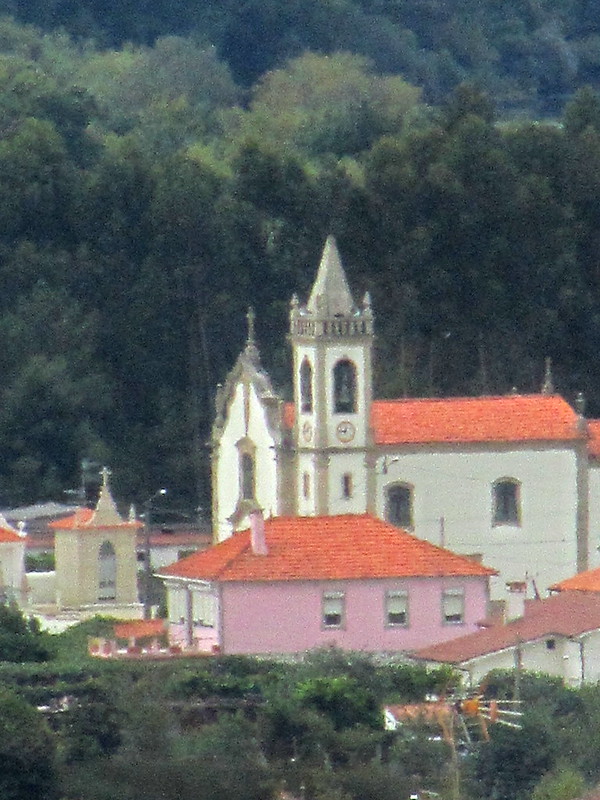
Uma iglesia portuguesa, con certeça

Uma iglesia portuguesa, con certeça

Mis mejores resultados en el SSRN


Iba a titularlo "tocando techo", pero quién sabe, ya no digo nada. Lo cierto es que termino este año con mis mejores resultados hasta la fecha desde que uso el SSRN. El Social Science Research Network, aclaro, es uno de los principales repositorios académicos del mundo—el primero del mundo habitualmente, y siempre el primero para las ciencias sociales y humanidades, según la Ranking Web of Repositories. La sección de humanidades se abrió en 2007 y empecé a utilizarla inmediatamente. Y he ido mejorando los resultados constantemente, en visitas y en número de artículos—quiero decir en sentido tanto absoluto como relativo. 

No sólo tengo más visitas y artículos (raro sería que tuviese menos) sino que subo en proporción a otros usuarios, al menos en algunos parámetros. No destaco ni en citas ni en el Eigenfaktor ése que utilizan como un (atípico) índice de clasificación. Pero sí estoy bien posicionado por ejemplo en número de descargas recientes, quizá el principal parámetro que utilizan. Allí estoy en el puesto 729 (de entre 270.000 autores—lo cual viene a ser en el 0,27 % superior—puntuándome sobre 10, una nota de 9,9.  Si sólo contamos como indicativos los 30.000 autores más activos, allí salgo con un 9,6 más o menos. Resultados excelentes, internacionales y objetivos, qué les voy a decir.

Son resultados que no tienen nada que ver con las puntuaciones que me han dado estos últimos años aquí, close to home, las corruptas comisiones de evaluación dirigidas por nuestros catedráticos. A ellos, por cierto, no los busquen por aquí.


De posicionamiento general aquí aparece una cifra que es el 2230, y que es el índice de más autoridad.  Según él estoy bien de lleno en el 1% superior en descargas totales. Alrededor del 0,8 % más bien. (Hay que decir que en Academia, otro repositorio multimillonario en número de usuarios, también estoy en el 1 por MIL superior). Este índice va actualizándose y es ligeramente diferente hoy en mi página del SSRN, en la que se me informa en su modo de visionado interno que "Jose Angel Garcia Landa['s] Author Rank is 2,174 out of 268,046"—algo mejor, y subiendo—a estas alturas.

Si esto no está mal, y quiere decir que alguien va leyendo mis artículos allí, aunque sean cuatro gatos académicos, mejores resultados todavía obtengo según otros parámetros. Este cuadro que sigue muestra  la clasificación general (los 30.000 autores principales) clasificados por número de contribuciones subidas al SSRN. Muy trabajador he sido, y estoy en el puesto 25. Veinticinco de 30.000—o de 270.000, si prefieren. (Si abundo ahí más de lo que soy leído, ése es un triste parámetro en el que no voy a entrar—que lo haga Rita). Disfrutemos de la portada:


El siguiente gráfico presenta los resultados recientes (del último año se entiende) según el mismo parámetro, número de contribuciones. Ahí aún destaco más, pues ocupo el puesto 19, el más destacado que he logrado jamás en este repositorio. Ya sé que al 19 no le dan medalla en ningún pódium.... mais quand même!


Aquí otra visualización del mismo posicionamiento, con gráfica de Wall Street.   ESTE TORNEO, lo llaman aquí—y no salgo nada abollado del mismo:


Me doy por felicitado por estos resultados.  ¿Me creerán si les digo que menos da una piedra?


—oOo—

The Psychiatrist is In clip from God Help the Girl

Dicen- la ronda de boltaña

sábado, 6 de diciembre de 2014

La "justicia" española excarcela a los mayores criminales

Tenemos a jueces en los puestos de más alta responsabilidad que literalmente pierden el culo por sacar de la cárcel a los asesinos más sanguinarios, en especial si son etarras.  El olor a tigre les puede y les derrite, a estos felones con puñetas. Lástima no los encierren a todos juntos en la misma celda, etarras y jueces, que es lo que merecen, y así disfrutarían—al menos los jueces. Hatajo de criminales, con y sin togas...

Las indicaciones y apaños de los gobiernos de Zapatero y de Rajoy, indignos y traidores, son las que posibilitan que sucedan estas cosas: crean la atmósfera adecuada, y las leyes que lo permiten. Y la gente (quizá incluso vosotros) ahí votándoles. Luego no os quejéis.

Aquí lo comentan en EsRadio:


En Tulsa

También me dedico al Far-West en ocasiones, como Mark Twain. Aquí aparezco (o subsisto desde hace varios años) en la Universidad de Tulsa:


—oOo—


A nadie le interesan mis rollos

A nadie le interesan mis rollos, para qué escribir.

Liane FOLY - Au fur et à mesure

Derrida, Limited Inc, Normativity

viernes, 5 de diciembre de 2014

Bérénice Hamidi-Kim "Théâtre, savoir, politique"

Saliendo de la trilogía: El final de 'The Unnamable'

Saliendo de la trilogía: El final de The Unnamable (Samuel Beckett y la narración reflexiva, 8)


Seguimos subiendo capítulo a capítulo el libro sobre Beckett:

Samuel Beckett y la Narración Reflexiva
es un estudio en profundidad de la escritura experimental de Beckett, en especial de la trilogía novelística Molloy, Malone Dies, y The Unnamable, desde la perspectiva de la narratología estructuralista y las teorías estructuralistas sobre la enunciación. Resulta de allí no sólo una mejor comprensión de la técnica utilizada por Beckett para transmitir su peculiar visión de la realidad, sino también toda una nueva gama de significaciones en estos textos. En este capítulo examinamos la clausura de The Unnamable (El Innombrable) entendida como un experimento de representación metalingüística aplicado a la función misma de la clasura narrativa.


Saliendo de la trilogía: El final de The Unnamable

http://papers.ssrn.com/abstract=2527915


Leaving the Trilogy: The Ending of The Unnamable (Samuel Beckett and Reflexive Narrative, 8)

Samuel Beckett and Reflexive Narrative is an in-depth study of Beckett's experimental writing, more specifically of the novelistic trilogy Molloy, Malone Dies and The Unnamable, from the standpoint of structuralist theories of narrative and of enunciation. An increased insight is thereby obtained into the technique used by Beckett to articulate his peculiar view of reality, and a new dimension of signification of these texts emerges. This chapter examines the ending of The Unnamable understood as an experiment in metalinguistic representation applied to the notion of narrative closure itself.

Reference Info: Samuel Beckett y la narración reflexiva. Zaragoza: Prensas Universitarias de Zaragoza, 1992.


eJournal Classifications - Date posted: November 21, 2014 
CSN Subject Matter eJournals


LIT Subject Matter eJournals
    
        
PRN Subject Matter eJournals
    
        
PRN Subject Matter eJournals


También aquí:

_____. "Saliendo de la trilogía: El final de The Unnamable." Social Science Research Network 21 Nov. 2014. (Samuel Beckett y la narración reflexiva, 8).*

         http://papers.ssrn.com/abstract=2527915

         2014

         Cognition & the Arts eJournal 21 Nov. 2014.*

         http://www.ssrn.com/link/Cognition-Arts.html

         2014

         English & Commonwealth Literature eJournal 21 Nov. 2014.*

         http://www.ssrn.com/link/English-Commonwealth-Lit.html

         2014

         Aesthetics & Philosophy of Art eJournal 21 Nov. 2014.*

         http://www.ssrn.com/link/Aesthetics-Philosophy-Art.html

         2014

         Continental Philosophy eJournal 21 Nov. 2014.*

         http://www.ssrn.com/link/Continental-Philosophy.html

         2014

_____. "Saliendo de la trilogía: El final de The Unnamable." In García Landa, Vanity Fea 5 Dec. 2014.*

         http://vanityfea.blogspot.com.es/2014/12/saliendo-de-la-trilogia-el-final-de.html

         2014

_____. "Saliendo de la trilogía: El final de The Unnamable (Samuel Beckett y la narración reflexiva, 8)." Academia 20 Aug. 2015.*

         https://www.academia.edu/15053757/

         2015

_____. "Saliendo de la trilogía: El final de The Unnamable (Samuel Beckett y la narración reflexiva, 8)." ResearchGate 20 Aug. 2015.*

         https://www.researchgate.net/publication/281106984

         2015


El narrador impersonal


—oOo—

Madres y niñas en la playa

Madres y niñas en la playa

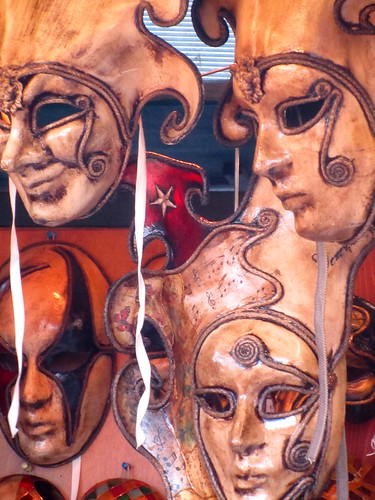
La maschera

Everybody's wearing a disguise 


Come sono belle queste maschere
Come sono brutte queste maschere
Si sono io le faccio io
Mi chiamano mascheraio
Metto pezzettini di carta
Comencio dal bordo
Dopo le sopracciglia, poi il naso e la bocca

Un giorno faccio una maschera che ride
Un giorno faccio una maschera che piange
Un giorno faccio una maschera bella
Un giorno faccio una maschera brutta

Come facile fare una maschera con diverse espressioni
Ma che peccato che non hanno il cuore
Che non hanno la circolazione del sangue
Che non sentono né fredo né caldo
Che non possono dire perché piangono o ridono

Ma con me sono diverse
Quando metto pezzettini di carta sugli occhi
mi guardano e mi danno i loro sentimenti
Quando metto pezzettini di carta sulla bocca
mi parlano e mi dicono tante cose
Quando metto pezzettini di carta sul naso
vedo che respirano
che sono vive

Ma allora, forse loro sono vere e noi siamo 
maschere


(H. —
Venezia - Primavera 1988)


A truth of masks

—oOo—

miércoles, 3 de diciembre de 2014

Flotando en el cielo, volando en el mar

Flotando en el cielo, volando en el mar

Much Ado about Nothing (and its afterlife)


From The Oxford Companion to English Literature, ed. Margaret Drabble:

Much Ado about Nothing, a comedy by *Shakespeare, written probably 1598-9, first printed 1600. Its chief sources are a novella by *Bandello and an episode in Ariosto's *Orlando Furioso. The play has always been a popular one in performance.

Ths prince of Arragon, with Claudio and Benedick in his suite, visits Leonato, duke of Messina, father of Hero and uncle of Beatrice. The sprightly Beatrice has a teasing relationship with the sworn bachelor Benedick. Beatrice and Benedick are both tricked into believing the other in love, and this brings about a genuine sympathy between them. Meanwhile Don John, the malcontented brother of the prince, thwarts Claudio's marriage by arranging for him to see Hero apparently wooed by his friend Borachio on her balcony—it is really her maidservant Margaret in disguise. Hero is publicly denounced by Claudio on her wedding day, falls into a swoon, and apparently dies. Benedick proves his love for Beatrice by challenging Claudio to a duel. The plot by Don John and Borachio is unmasked by the 'shallow fools' Dogberry and Verges, the local constables. Claudio promises to make Leonato amends. Claudio promises to make Leonato amends for his daughter's death, and is asked to marry a cousin of Hero's; the veiled lady turns out to be Hero herself. Benedick asks to be married at the same time; Beatric, 'upon great persuasion; and partly to save your life, for I was told you were in a consumption', agrees, and the play ends with a dance.


From the Oxford Dictionary of Shakespeare, by Stanley Wells:

Much Ado about Nothing. Shakespeare's comedy ws first printed in *quarto in 1600, probably from the author's manuscript. This edition was reprinted in the First *Folio (1623). The play was not mentioned by *Meres in 1598, and is usually dated 1598-1600. It is based on a traditional story which had been told by Ariosto in his Orlando Furioso (1516, translated 1591), and by Bandello, translated into French by *Belleforest. It was played at Court in 1613, and a poem by Leonard *Digges printed in 1640 suggests that it remained popular. William *Davenant adapted it as The Law Against Lovers (1662), with little success.
 
The original play was performed in 1721, and there were further revivals in 1739 and 1746, but it did not fully regain its popularity until David *Garrick first played Benedick, in 1748, after which he revived it regularly until he retired in 1776. His first, and greatest, Beatrice was Mrs. *Pritchard. 
 
During the later part of the century Frances Abington and Elizabeth Farren shone as Beatrice. Charles *Kemble succeeded as Benedick from 1803, and the play's popularity during the nineteenth century culminated in Henry Irving's *Lyceum revival of 1882, in which Ellen *Terry gave her legendary Beatrice, which she went on playing for a quarter of a century.
 
The most famous twentieth-century production is John *Gielgud's at Stratford-upon-Avon, first given in 1949, when he did not appear in it, but revived in 1950 with himself as Benedick and Peggy *Ashcroft as Beatrice, and repeated several times during the 1950s.
Much Ado about Nothing has proved to be one of Shakespeare's most resilient plays. Twentieth-century productions have frequently updated the action. Hugh Hunt directed it in modern dress in 1947. Douglas Seale, at Stratford-upon-Avon in 1958, in costumes of about 1851, Franco *Zeffirelli, at the *Old Vic in 1965 in a farcical version set in late nineteenth-century Sicily, John *Barton at Stratford-upon-Avon in 1976 in a setting of nineteenth-century British india with Judi *Dench an unusually serious, and wholly credible, Beatrice, and Terry *Hands, also at Stratford-upon-Avon, in 1982. Susan Fleetwood and Roger Allam played Beatrice and Benedick in Bill *Alexander's production (Stratford, 1990) and Kenneth *Branagh directed a lively and successful film in 1993, playing opposite Emma Thompson as Beatrice. The play was enjoyable in all these varied interpretations. Critics have been troubled by the moral ambiguities of the Hero-Claudio plot, but theatrically the sub-plot characters of Beatrice and Benedick, along with Dogberry and the Watch, have always carried the play to success.


martes, 2 de diciembre de 2014

Cuadro de gaviotas 7

Cuadro de gaviotas 7

El principio del tiempo


El principio del tiempo: una nota sobre Stephen Hawking

 Comentario de la conferencia de Stephen Hawking "El principio del tiempo" sobre las implicaciones cosmológicas de la teoría de la relatividad y el Big Bang. Exponemos algunas implicaciones metafísicas y representacionales en relación a la existencia de singularidades, y notamos el problema conceptual planteado por la asimetría del Universo, inexplicable desde la teoría de un origen absolutamente simple.
 

http://papers.ssrn.com/abstract=2526670 


English abstract:

(The Beginning of Time: A Note on Stephen Hawking)

A commentary on Stephen Hawking's lecture "The Beginning of Time" on the cosmological implications of the theory of relativity and the Big Bang. The paper points out some metaphysical and representational implications as regards the existence of singularities, and notes the conceptual problem posed by the assymetry of the Universe, which cannot be derived from an absolutely simple origin.


Está ahora además en varias revistas del SSRN, con fecha 19 Nov. 2014  


PRN Subject Matter eJournals
    
Added to eLibrary


PRN Subject Matter eJournals
            
Added to eLibrary
PRN Subject Matter eJournals
    
Metaphysics eJournal - CMBO
        
PRN: Time & Space (Topic) - CMBO
Added to eLibrary
PlanetSciRN Subject Matter Journals
    
Added to eLibrary
PlanetSciRN Subject Matter Journals
    
Cosmology & Large-Scale Structure eJournal - CMBO
        
PlanetSciRN: Other Cosmology & Large-Scale Structure (Topic) - CMBO
Added to eLibrary


_____. "El principio del tiempo." In García Landa, Vanity Fea 8 Dec. 2011. *

         http://vanityfea.blogspot.com/2011/12/el-principio-del-tiempo.html

2011

_____. "El principio del tiempo." Ibercampus (Vanity Fea) 14 Dec. 2011.*

         http://www.ibercampus.es/articulos.asp?idarticulo=14551

         2013          

_____. "El principio del tiempo: Una nota sobre Stephen Hawking (The Beginning of Time: A Note on Stephen Hawking)." Social Science Research Network 19 Nov. 2014.*

http://dx.doi.org/10.2139/ssrn.2526670

https://ssrn.com/abstract=2526670

         2014

         Philosophy of Science eJournal 19 Nov. 2014.*

         http://www.ssrn.com/link/Philosophy-Science.html

         2014

         Metaphysics eJournal 19 Nov. 2014.*

         http://www.ssrn.com/link/Metaphysics.html

         2014

         Cosmology & Large-Scale Structure eJournal 19 Nov. 2014.*

         https://www.ssrn.com/link/Cosmology-Large-Scale-Structure.html

         2020

_____. "El principio del tiempo." In García Landa, Vanity Fea 3 Dec. 2014.*

         http://vanityfea.blogspot.com.es/2014/12/el-principio-del-tiempo.html

         2014

_____. "El principio del tiempo: Una nota sobre Stephen Hawking." Academia 25 Sept. 2016.*

         https://www.academia.edu/28703011/

         2016

_____. "El principio del tiempo: Una nota sobre Stephen Hawking." ResearchGate 25 Sept. 2016.*

         https://www.researchgate.net/publication/308596646

         2016

_____. "El principio del tiempo: Una nota sobre Stephen Hawking." Net Sight de José Angel García Landa 4 Jan. 2023.*

https://personal.unizar.es/garciala/publicaciones/principiodeltiempo.html

https://personal.unizar.es/garciala/publicaciones/principiodeltiempo.pdf

         2023


—oOo—


lunes, 1 de diciembre de 2014

The Newly-Created Day

The Newly-Created Day

Notes on Ian Watt's THE RISE OF THE NOVEL

 1: Realism and the Novel Form

The novel arises in the 18th c. because of favourable social conditions. it's a new literary genre; we must define its characteristics.

Realism. This term has come to mean "fiction that portrays low life" (from Flaubert). But the novel's realism doesn't reside in the kind of life it presents, but in the way it presents it—a scientific scrutiny of life. Epistemological value: in the 18th ce. universals have been rejected; truth comes through the senses (Locke, Descartes). But the method is more important: for the realists, the individual investigator studies the particulars of experience. Importance is given to the relation between words and reality. Descartes followed an individualist method. For the novel, individual experience is always unique, new. It can't be analyzed by referring it to the accepted models. Traditional plots are rejected for the first time (Shakespeare, Milton, the Greeks, the Romans—all considered human life basically unchangeable adn complete). Plot, character and morals are still not perfectly interpenetrated in Defoe, Richardson and Fielding. Tradicional characters (universals) are also rejected (cf. Berkeley: "everything that exists is particular"). Shaftesbury still rejects particularity and the taste of the peculiar. But in Defoe and Richardson we find a particularity of descriptions of characters and environmnet. Individual identity is a matter of controversy to the philosophers of this time. Characters are given particular names and surnames, not generic or descriptive names. (Nevertheless, Richardson's and Fielding's characters still preserve msome of that tradition. But that is a secondary function already. In Amelia names are natural, assigned in a random manner.

Locke and Hume analyze personal identity, and identify it with the identity of consciousness through duration. Both ideas and characters become general by separating them from their particular circumstances of time and place.The novel uses stories set in time: past experience is the cause of present action; time scale is more minutely discriminated. Realism is associated to the slowness of virtual time (stream of consciousness carries it to an extreme). Also, a respect arises for a coherent time-scheme which didn't exist in the classics. Defoe's plots are rooted in time; in Richardson we find a date at the heading of each letter. Fielding mocks Richardson's exactitude, but uses a time-coherent scheme: the Jacobite rebellion in 1745 and the phases of the moon in Tom Jones, etc. Time and space are inseparable. Defoe is the first writer to use a definite space and objects. In Richardson provides description of interiors: settings are, like in Balzac, a pervasive force. Fielding is more conventional, but gives an exact topography. Prose must be adapted to give an air of authenticity. Up to them, rhetoric ws used to embellish in an artificial way. Locke attacks the deceitfulness of rhetoric. Defoe and Richardson are often clumsy, because they want to be real. Fielding is more orthodox and polished But his stylistic virtues bring a selectiveness of vision which is far from the uncompromising application of the realist point of view in Richardson and Defoe. Like La Fayette and Laclos, he is too stylized to be authentic. The novel works more by exhaustive presentation than by selection—more so than other genres. It is also more translatable.

The formal realism of the novel is, too, a convention, but it allows a more immediate imitation of actual experience than other literary forms. It makes less demands on the audience. Predecessors of the novel: Homer, Chaucer, Apuleius's The Golden Ass, Aucassin et Nicolette... But this aesthetic had never been followed systematically. 

2: The Reading Public and The Rise of the Novel

There is a gradual extension of the reading class. About 80,000 in the 1690s— unreliable figures perhaps? But it's still a progress. There was a very limited distribution of literacy. School for the lower classes was intermittent and limited. It was not a necessity to learn. Books were very expensive: circulating libraries appear. The middle class grows, and there are more and more women readers. They read mostly religious works: readers of fiction are a different group. Readers of periodicals, too—a miscellaneous taste, a mixture of improvement and entertainment. Booksellers achieve a strong fiinancial standing, and can influence authors, who are their employees. Richardson was commissioned by them; Johnson was promoted by them. The commercial laws favour prose and copiousness rather than verse: this helps the novel. Writers are independent and not oriented to the Court as in France: there is a lesser force of tradition.


3: Robinson Crusoe. Individualism and the Novel

The novel's concern for the individual depends on
- the society's hight valuation of the individual
- variety of belief and action among ordinary people, to make them intereseing.
In modern society there is a value of the individual apart from society or tradition. Two historical causes: the rise of modern capitalism, and the spread of Protestantism.

Capitalism. Capitalism is linked to economic specialization,  and to more democracy; it promotes freedom of choice. Social arrangements typical of capitalism are individual, not collective (as they were in the family, the guild, the church...). There is a slow rise of capitalism from the 16th to the 19th century. Shakespeare, Jonson, Dryden, etc. defend the traditional order. Now, the contrary is the case. Hobbes stresses individualism. Locke speaks of the rights of the individual. Defoe is in this line of thought; there is a link between individualism and the rise of the novel. Robinson is homo oeconomicus. All of Defoe's heroes pursue money, according to a profit-and-loss bookkeeping technique. They enter continuous contractual relationships. Traditional relationships (family, town, nation...) appear weakened. Defoe's heroes have no family, or leave them to better their situation. The argument between his parents and Crusoe is not one of filial duty or religion, but one of material advantages. Religion has an obstructive role: the contrary appears in Defoe's moral pamphlets. Xeenophobia appears only where there are no economic virtues; "with money in the pocket one is at home everywhere." The plot of Robinson Crusoe is rooted in the realities of the time; merchants, colonists... Sex is placed under strict control as a non-rational factor: there is no romantic love, and little sexual satisfaction. Matrimony is an investment. Crusoe desires a male slave. The story of Xury is significant: relationships are treated in terms of their commodity value. With Friday, Robinson establishes egocentric master-slave relations. Only when he receives mone does he feel deep feelings. His friends are those that secure his economic interests. Crusoe and Defoe are blind to aesthetic experience. The natural scenery is exploited, not admired. If he plays with his animals, he doesn't dance with them. We find Crusoe's adventure intereesting because capitalist economic specialization has deprived us from a lot of daily life experiences. We only do one thing, and enjoy others through printed matter. Crusoe experiences the Dignity of Labour: an absolute equivalence between individual effort and individual reward. Labour is varied and inspiring. This is a Calvinistic idea: labour is a religious and ethical obligation. Friday doesn't bring relaxation, but extended productivity. Defoe cofuses religious and material values: a sophistic creed. There is still a religious framework, but this will disappear in other authors.

Protestantism. Protestantism is associated to individualism. It promotes a direct contact between man and God. Protestants emphasize self-scrutiny; journals are kept, and extreme egocentricity is promoted. Defoe was a Dissenter with no fixed creed. Crusoe has Puritan tendencies: toward self examination, Bibliolatry, interpretation of natural phenomena in an egotistic way. But Crusoe is intended to be a neutral character, a man for whom we could all substitute ourselves. Democratic individualism of Defoe—no high birth for Robinson, etc. Defoe nonetheless subordinates allegory to reality (i.e. he is a novelist, while Bunyan doesn't). Religion in his work is perfunctory: there is an unconscious secularization, due to economic and social progress. Ties with the Church are loosened, resulting in individualism.

Crusoe is a Western myth: the man who can manage on his own, without any social restrictions, and usfulness as the rule, a philosophy of laissez-faire. But it is a false myth: Defoe has disregarded the social nature of all human economies and the psychological effects of solitude. Moreover Robinson has tools: he is not a primitive or a proletarian, but a capitalist. Crusoe turns his disgrace into a triumph: solitude is the prelude to the fuller realization of the individual's potentialities. Defoe is conscious of this meaning, and he even hints that it is an allegory of his own life. An ethics of resolution against bad circumstances; praise of personal alienation from society. Communication is false, only a mockery. The first novel presents us with the annihilation of the relationships of the traditional social order: new relationships have to be built up.


4. Defoe as novelist: Moll Flanders

This is Defoe's most typical novel. Moll is a product of modern individualism; her crimes are rooted in the dynamics of economic individualism, she's not a picaro. (The picaro is not interesting in himself; it is a literary convention for the presentation of satiric observations and comic episodes). The reader identifies with Moll. Indigence is shameful: we see again Economic Man, similar to Robinson. Defoe has little control over his narrative: there are unconscious blunders, and little consistency. There is no authorial conscience—this is ephemeral writing. Most novelists concentrate on a few pictures and reduce synopses of action to a minimum. Defoe does the contrary, which weakens the force of the narrative. But it gives an impression of authenticity. He writes unadorned prose, with many Anglo-Saxon words, and focusing on the primary qualities of objects (there are no colours, sound or taste)—related to the scientific and rational outlook of the eighteenth century. It is popular fiction, highly readable, and of a journalistic nature ("Mr Review", Defoe's editorial character in "The Review", is similar to Moll Flanders as a narrator.

There is formal realism, but an incoherent structure. 2 parts, with a long first part—Moll's career as a wife. The second tells her criminal activities and their consequences. Five marriages, rather rudimentary interlockings. Her criminal adventures lead to her meeting in prison a former husband; later she returns to her family in Virginia. There is a unifying mechanism, similar to "Roxana", based on relationships, both have inconclusive endings. Unity comes through the central character, as in biographies (cf. Hume on identity) —due to a desire to be realistic, or to an inability to be otherwise? According to Aristotle, history is concerned with what actually happened, and poetry with the propable or necessary. Defoe then writes pseudo-history, as a liar.

Moll Flanders is a novel of character without any psychological analysis: elections are made quickly and aptly, automatically. He assumes the heroine's character withougt describing it. But we are told contradictory things; she has hidden information, etc. Is she a loving wife? A heartless mother? Is she affectionate? She enters self-centered relationships with other characters. Moll is similar to Defoe: her feminine traits are superficial. The novel was admired by Virginia Woolf because Moll shows no unconscious feminine traits. She is, according to Defoe, a public-minded citizen who has had bad luck. She doesn't like vice for its own sake. But Moll is also unaffected by her surroundings.

A middle-class notion of gentility reigns, a restless and amoral individualism. There is an unconscious identification between the author and the character. Defoe claims that it is a moral story, that crime doees not pay, but this is unsubstantiated. Moll is not repentant—that would impair the delight the reader takes in the action, and it would also be less immediate. Didactic commentaries fail to be clearly placed at any stage of moral development. Formal realism appears here as an end, not as a means: there is no moral. Morals will later be expressed through the control of the point of view; Defoe has no such control. Claims are sometimes made that he did have it—that he is morally detached from his heroine, e.g. in the ironical preface (Virginia Woolf, Coleridge, E. M. Forster). There is often a bathetic transition from sentiment to action (money, rhum); but the irony has a dubious status, there is no consistent ironical attitude throughout the novel. Defoe cannot ironize—only impersonate (as in "The Shortest Way with the Dissenters"). Only in an ahistorical view can Moll Flanders be considered a masterpiece, by judging it by the standards of our time—which is a tribute to Defoe's vitality as a writer. His formal realism mixes many traditions (tragedy, comedy, history journalism); irony can be achieved by contrasting the attiudes peculiar to them, but Defoe doesn't know that. There is a lack of moral or formal pattern, a weakness of construction, an inattention to detail. But he has a supreme talent as a realist portrayer of episodes. Richardson will have both assets—which is why he is the real founder.

Defoe, like Marlowe, produces unconsciously autobiographic works, episodic in nature—ego vs. mundum.  As in Stendhal, individualism rules: an energetic and unwise vision of life. There is a kind of moral: an energetic stoicism, a comfortable vitality. The chance mingling of attitudes and situations is original, and will influence later novels. Defoe creates both a new subject and a new literary form to embody it.


5. Love and the Novel: Pamela

Richardson solves some of Defoe's failures: he gives the novel a plot. The traditional theme of courtship is exploited in a new way, to give his novels unity, not episodity.

I. Love as a positive value arises in Provence. Like individualism, it has its roots in Christianity (the courtship of the Virgin). However, courtly love was too conventionalied to be a novel plot. In England, a new conception of marriage arises, through puritan influence. Marriage as God-given unity, difficult for women to achieve. In Pamela we find romantic love combined with social class conflicts, and conflicts between sexual instinct and the moral code.

II. The values of courtly love and those of marriage can only be combined when there is consent, free choice. Early modern England was more liberal to women than other countries. Romantic love and matrimony are the correlative of the elementary family and the disgregation of the patriarchal system. In Defoe and Richardson, there is a tendency to the assertion of individual freedom from family ties. But women are under Roman law; they can't realize economic individualism. Roxana is a clear example. The need of a dowry was unfavourable to women.

III. There was a popular concern for these facts. The status of unmarried women declined; they come to be seen as ridiculous: the word 'spinster' appears. They had to accept badly-paid jobs or dependence: there were no convents available for high-class spinsters. Richardson advocates such convents. Bachelors appear as socially deplorable and morally dangerous (especially for Puritans). Richardson's Grandison declares: "I am for having everybody marry." Pamela symbolizes the aspirations of all women in that period, and has been followed by many (in similar conditions). The marriage ceremony goes on for 200 pages; at that time, the terms of marriage aren't still well defined. Mr. B tries to delude Pamela with a mock marriage. Puritans support this view of marriage—even if it means that they must get married in an Anglican church.

IV. Feminine reading public: a taste for fiction and moral works. Pamela has both. Richarson has feminine tastes; domestic detail is an enjoyement to women. The plot provides flattery on women, and discipline on men. The woman rises socially.

V. A clash of two attitudes on sex and marriage, represented by Richarson and Fielding.  Richardson adjusts language to the new feminine code. There is a decarnalization of the public feminine role, and a systematic bowdlerizing. (Richardson's prudery).

VI. These changes explain Pamela's unity and its combination of moral purity and impurity. A departure from Stiltrennung—a combination of high and low motives, e.g. chastity is valued by a servant-girl. The psychological and moral content is deeper than ever: barriers are not social, but psychological. Puritanism builds a bridge between flesh and spirituality, through marriage (Courtly love doesn't). But woman must wait until she is engaged to feel love—in Pamela, when she is going away. Both characters recognize themselves. The plot includes a peripety and recognition which coincide (the best for Aristotle). This is made possible because of the unprecedented disparity between social roles and feelings. This has led to contradictory interpretations—is Pamela a hypocrite? It is social circumstances that forbid openness. It is a sex-centered work; taboo is always the centre of attention and interest. The novel appears as an initiation site to the fundamental mystery of society. Pamela is a combination of sermon and strip-tease.


Chapter 7- Richardson as Novelist - Clarissa

Richardson is a conscious innovator: he hopes that Pamela will induce a new species of writing. Clarissa revolves better the problems of the unification of narrative mode, plot, characters, and morals. There are no digressions: the themes spring from the subject (Richardson says).

I. A better use of the letter form. In Pamela, there is the dange of one-sidedness, compromising the credibility of the heroine. It ends up in a journal; the editor is a clumsy device. In Clarissa the epistolary narrative carries the whole burden. It is a dramatic narrative rather than a history, Richardson claims. The formal division rests on the dichotomy of the sexual roles: Clarisa and Lovelace write to people with their own morals, in an uninhibited way. There is a relationship between the action and the narrative mode. In the first and second volumes, only Clarissa writes; then both, at last only Clarissa. The tempo varies (e.g. in the rape scene). There is a careful characterization: Lovelace did not seem a complete villain at the time. Clarissa sees that he has good sense at the bottom, and it is that which makes her fall in his power. The moral is that both parties were wrong—her parents ought'ntto have forced Mr Solmes on her, and she shouldn't have gone away. Christian morals. As in Pamela, virtue is rewarded—but in Heaven. In spite of this, Clarissa is a tragedy. Knowledge of religion is weak, and there is a sense of defeat at the end. One third of the book is taken up by the funeral. Funeral literature was fashionable at the time; even Puritans allowed rich funerals. In her death, Clarissa collaborates with God, who has marked her for his own.

II. Richardson's moralizing, like Defoe's, is unpalatable. Fielding and Sterne are satirists: we don't judge their values. But Richardson's identification with these values makes Clarissa coherent. An obsession for class distinctions. In Pamela, there is a colliding respect for nobility and a contempt for Mr B's morals. In Clarissa, both belong to a similar class: wealthy landed gentry with aristocratic connections—Clarissa's a little less aristocratic. For James, daughters are chickens brought up for the tables of other men. He is an ally of Solmes—he doesn't want Clarissa to have a a high dowry. Solmes belongs to a lower class, but he is rich, and he only wants her father's estate (which is already hers, given her by her grandfather). Lovelace appears as attractive and motivated by attraction, while Solmes is moved by money. Clarissa is alone: both family authority and economic individualism go against her. She escapes to be free, not because of love. And to Lovelace, one of the two must be a prize. He believes at first that women have no souls—at last he acknowledges hers as superior. All others, except for Clarissa, use people as means (which Kant will forbid to do). Lovelace fears her when she is in his power, because of her inner inviolability. Lovelace believes women's bashfulness to be hypocritical—a Cavalier attitude, whereas Clarissa's is puritan.

Clarissa doesn't want to marry Lovelace—an assertment of the seriousness of the code. A reformed rake will is not a good husband (compare here the plot of Pamela). Lovelace becomes convinced that she loved virtue for its own sake.

Sexual repression can lead to self-deception (as in Pamela). In Clarissa, psychological tension arises from this self-deception. She gradually discovers that she is in love with Lovalce, something which Anna Howe knew all along. Lovelace's sophistries, on the contrary, are conscious: his honour consists in telling the truth to men and lying to women. Sadism is the extreme attitude of Lovelace's position. A sadistic sexual male vs. a masochistic asexual female (the violation episode is one of extreme passivity). Clarissa has a sexual dream in which Lovelace stabs her: an equation of sex and death by Clarissa. And she knows she's not wholly blameless.

There are various perverse deviations of sexual impulse in Clarissa's funeral. Diderot hails Richardson as the first who discovered the frightening reality of unconscious life even in virtuous persons. Evil and good are mitigated; there is a denser psychological pattern. Lovelace's villainy is conscious, buth there is a stifled goodness beneath. Their attitudes are extreme; human love is impossible because Clarissa doesn't recognize the flesh nor Lovelace the spirit; he recognizes himself only through his rakery. They are star-crossed lovers: the barriers between them are psychological—the result of internalized social forces. In theory, the novel offers flat didacticism, but actually there is deep penetration and an insight into the final ambiguity of human life.


Fielding as Novelist: Tom Jones

A widely different conception of the novel in Fielding and Richardson: two outlooks on life. Johnson condemns Fielding as coarse, although he is nearer to his own neo-classicism. He was a friend of Richardson, and finds in Fielding "superficial characters of manners". It is not so much a contrast between physical description vs. psychology as a matter of sketchiness vs. detail in both aspects. Fielding has less characterization and relies heavily on a complicated plot (Coleridge speaks of the plot of Tom Jones as one of the three best plots in literature together with Oedipus and Volpone; a return to norm in Fielding). In Moll Flanders money determines the action. In Fielding it is a plot device. Birth is a determining factor (in Defoe it was money, in Richardson virtue): Fielding is a classist. Tom doesn't discuss the appropriateness of the custom that forbids him to marry Sophia. In Richardson, the individual is crucified by society; Tom Jones adapts successfully. In Richardson, character changes and proximity drive the plot; in Fielding, a kind of law over the individual. Individuals are individual manifestations of the great pattern of Nature; they are not individuals but a species [cf. Johnson's neoclassicism.] Fieldings objective is taxonomic. Also, Richardson's approach is a breach of decorum, an intentional one. But it leads to emotional artificiality—exaggerated reactions in order to show feelings. There is little psychological development in Fielding. Has Tom learned anything? We have to believe Fielding on this issue.

An Aristotelian view of character in Fielding. Actions are not the consequences of moral behaviour; personal relationships are unimportant. Neither can touch a fixed character. There is a lack of communication between characters. Sub-plots are episodes which are dramatic variations of the central theme. There is an explicit authorial control over a fictional world. Tom thinks of Sofia but goes with Molly: he is merely a puppet to desmonstrate an idea of Fielding's. The importance of plot in the novel in general is in inverse proportion to that of character. A complicated plot leads to passive agents, but happily contrived secondary characters, those not hampered by the needs of the narrative design (the protagonists sometimes do actions which are at variance with their authors' intentions).

To Johnson, Fielding makes immoral people attractive. But Fielding's morals are more Shakespearean. He broadens our moral senses: sex is accepted in the tradition of the comedy. The author as omniscient chorus; essayistic digressions, which produce a distancing effect. An ironical attitude rowards the reality of his own creation. Moral sense is conveyed mainly through the author's speech, not through action—a defect. Fielding goes far from formal realism, but gives a wider view of mankind and society. Not of the individual, though.


Realism and the Later Tradition: A Note

Sterne conciliates Richardson and Fielding, with both internal and external approaches to character: formal realism of time, place, and persons, and lifelike action. Great detail. But it is a parody, not a novel. Narration in the present of the author's mind (as in Richardson)—but it is past because of its subject. External time as in Fielding (allusions to Flanders). Contrast between literature and reality; the time of reading, life, and the time of writing. Mental life gives flexibility and accounts for durée. There is a freedom to comment, as in Fielding, but no unrealistic effect because it is autobiographic. Contrastive scenes in order to assess (artificial in Fielding) are natural in Sterne because of the stream of consciousness. Toby is benevolent as Clarissa, but there is also irony (Widow Wadman, similar to Lady Booby in Fielding). Characters are shown in detail, but they are humours. An undermining or a reconciliation of Fielding and Richardson?

Jane Austen and Fanny Burney: Similar to Grandison, emphasis on daily life). Minute presentation of everyday life, but a detached attitude. Authorial narration, not a participant narrator. But they do not produce an inauthentic effect, distancing is discreet. And the point of view is close to the subjective world. The themes too: social and moral problems of economic individuals and the middle-class quest for status. They are centered on the feminine role, marriage.


Notes from Ian Watt's book 

 The Rise of the Novel: Studies in Defoe, Richardson and Fielding. (Berkeley: U of California P; London: Chatto & Windus, 1957) Harmondsworth: Penguin, 1963.

Notes taken c. 1983.


—oOo—

Mi fotoblog

Mi fotoblog
se puede ver haciendo clic en la foto ésta de Termineitor. Y hay más enlaces a cosas mías al pie de esta página.