
domingo, 27 de noviembre de 2022


COVID CERO YA
Bienvenido otra vez a Twitter, Joshua Philipp!!
They finally found the China Model that can end COVID https://t.co/C1GjHLJuSq
— Joshua Philipp (@JoshJPhilipp) November 26, 2022
sábado, 26 de noviembre de 2022

Enheduanna: La que escribió
Babcock, Sidney. (Curator at Morgan Library and Museum). "Reflections on the Exhibition 'She Who Wrote: Enheduanna and Women of Mesopotamia ca. 3400-2000: An Illustrated Lecture." 16 Jan. 2023. Online info at Morbid Anatomy. 2022.*
2022
Mark, Joshua J. "Enheduanna." World History Encyclopedia 24 March 2014.*
https://www.worldhistory.org/trans/es/1-10021/enheduanna/
2025
Luchando por El Salvador
Cómo estamos logrando la victoria…
— Nayib Bukele (@nayibbukele) November 24, 2022
How are we achieving victory… pic.twitter.com/Th2Zz8WMho
Ante la hipocresía de algunos en la “comunidad internacional”…
— Nayib Bukele (@nayibbukele) November 25, 2022
Replying to the hypocrisy of some in the “international community”… pic.twitter.com/cCTSixE6GN
viernes, 25 de noviembre de 2022
16 tipos de familia

Díaz, Itxu. "Las familias de Belarra." Libertad Digital 25 Sept. 2022.*
https://www.libertaddigital.com/opinion/2022-11-25/itxu-diaz-las-familias-de-belarra-6959381/
2022
—oOo—

Tuertera selectiva

Navajas, Santiago. "Usted es fascista." Libertad Digital 25 Nov. 2022.*
https://www.libertaddigital.com/opinion/2022-11-25/santiago-navajas-usted-es-fascista-6958968/
2022
—oOo—

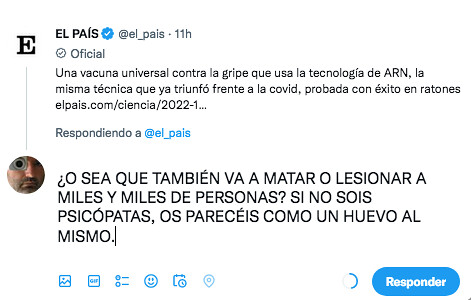
Inóculo Experimental
El gobierno no garantiza que puedas comer todos los días o que tengas calefacción o que puedas llenar el depósito del automóvil o que te operen antes de que tu enfermedad te lleve a la muerte
— El Contrafuerte (@ElContrafuerte) November 25, 2022
LO QUE NUNCA TE FALTARÁ SERÁ LA CUARTA, QUINTA O SEXTA DOSIS DEL INÓCULO EXPERIMENTAL
My Lord All-Pride

My Lord All-Pride
Bursting with Pride, the loath'd Imposthume swells,
Prick him, he sheds his Venom strait, and smells;
But 'tis so Lewd a Scribler, that he writes
With as much force to Nature, as he fights.
Harden'd in shame, 'tis such a Baffled Fop,
That ev'ry School-Boy whips him like a Top:
And with his Arme, and Head, his Brain's so weak
That his starv'd Fancy is compell'd to take,
Among the Excrements of others' Wit,
To make a stinking Meal of what they Shit.
Soe Swine, for nasty Meat, the Dunghill run,
And toss their gruntling Snowts up, when they've done:
Against his Stars, the Coxcomb ever strives,
And to be something they forbid, contrives.
With a Red Nose, Splay Foot, and Goggle Eye,
A Plough-Mans looby Meene, Face all awry,
With stinking Breathe, and ev'ry Loathsome mark,
The Punchianello sets up for a Spark.
With equal Self-conceit too, he bears Arms,
But with that vile success, his part performs,
That he Burlesques his Trade, and what is best
In others, turnes like Harlequin to Jeast.
So have I seene at Smithfields wondrous Fair,When all his Brother-Monsters flourish there,
A Lubbard Elephant divert the Town,
With makeing Legs, and shooting off a Gun.
Goe where he will, he never finds a Friend,
Shame, and derision, all his steps attend:
Alike abroad, at home, i'th' Camp, and Court,
This Knight o'th' Burning Pestle makes us sport.
From Poems by John Wilmot Earl of Rochester. Ed. with an introduction and notes by Vivian de Sola Pinto. London: Routledge and Kegan Paul, 1953. 2nd ed. (Muses' Library). 1964.
From the Introduction, pp. xxii-xxiii:
It was during the fourteen or fifteen years that he spent at Court that Rochester acquired the reputation for wickedness that hung round him like a sulphurous halo in the eighteenth and nineteenth centuries. He seems to have made an enemy of John Sheffield, Earl of Mulgrave (afterwards Duke of Buckinghamshire), in the late sixteen-sixties. Sheffield was one of the minor Court Wits, a humourless, rather pompous person, not without literary talent, but with an immense opinion of his own importance. He became the friend and patron of Dryden and later of Pope and appears to be one of the chief sources of Rochester's evil reputation. The quarrel between the two men came to a head in November 1669, and Rochester has commonly been accused of cowardice for refusing to fight a duel with 'My Lord All Pride', as he called Sheffield. This was the version of the story given by Mulgrave himself in his memoirs (1), but entries in the Journals of the House of Lords (2) show that the duel was actually stopped by the personal intervnetion of the King, at whose request the House sent the Gentleman Usher of the Black Rod to secure the persons of both the ppers. Both of them were brought before the House, and made to promise to keep the peace. These entries seem to prove that there is no foundation for the charte of cowardice brought against Rochester on this occasion. When he judged that fighting was necessary, he was quite willing to fight; on 25th March 1673 a duel between him and Lord Dunbar, a notorious bully, was narrowly averted by the Earl-Marshal's intervention, and in December, 1674, when Mulgrave challenged Henry Savile, Rochester offred to act as second to his friend.
(1) The Works of John Sheffield (London, 1723) ii, 9, 10.
(2) Journals of the House of Lords, vol. xii (1666-75), pp. 272, 274, 2786, 277 s.d. 23rd, 24th, 26th Nov. 1669.
IRENE MONTERO ABANDONA EL CONGRESO LLORANDO Y LLAMANDO FASCISTAS A LA OPOSICIÓN
Algarra, Javier, et al. "El Contrapunto 25/11/2022." Audio. Decisión Radio 25 Nov. 2022.* (Irene Montero, PSOE alliances vs. Spain).
2022
Nunca se ha tratado de qué se dice sino de quién lo dice. El que manda elige cuándo se monta el escándalo
— La Gaceta de la Iberosfera (@gaceta_es) November 28, 2022
Por @JTorres_86https://t.co/53Yn25T6RF
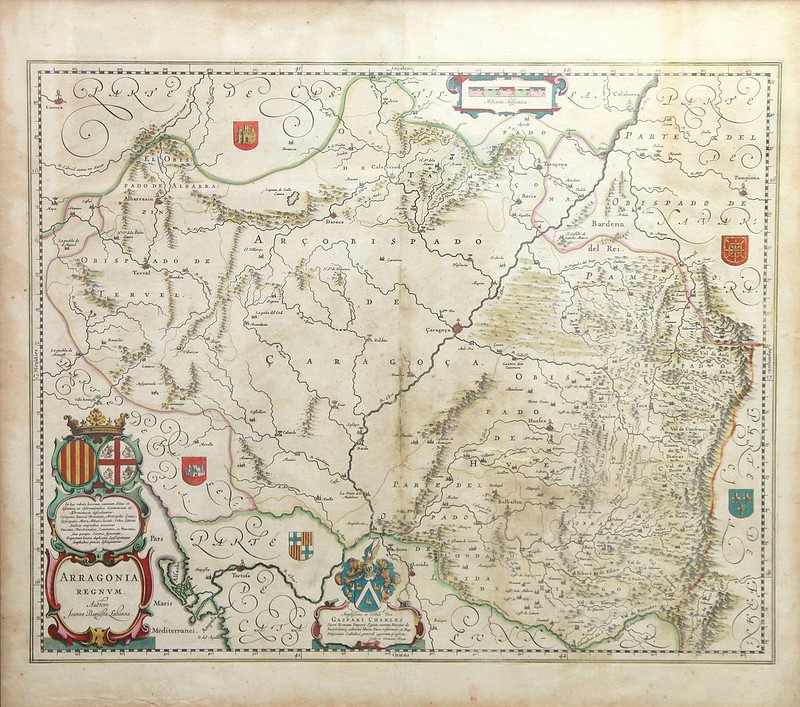
La Confederación Plurinacional de Sánchez
@unizar La voladura de la confederación plurinacional de Sánchez https://t.co/x6kXvFNs9q
— JoséAngelGarcíaLanda (@JoseAngelGLanda) November 25, 2022
Una cosa que está pasando en el Tribunal Supremo
‼️El Secretario de Marchena le desautoriza, y deja sin efecto el encarcelamiento del juez Presencia.‼️https://t.co/B1eM5Q8O38
— ACODAP Teaming (@TeamingAcodap) November 25, 2022
Las Inscripciones como Mass Media
Duclos Bernal, Adela. (gs Ciencias de la Antigüedad, U de Zaragoza). "Antes de las redes sociales los romanos se comunicaban con inscripciones en bronce y piedra." The Conversation 23 Nov. 2022.*
2022
Comentario que le pongo en Facebook y en The Conversation:

José Angel García Landa
Profesor titular de Filología Inglesa, Universidad de Zaragoza
Mi fotoblog

se puede ver haciendo clic en la foto ésta de Termineitor. Y hay más enlaces a cosas mías al pie de esta página.
Muy interesante. En este texto de Polibio que comento puede captarse una alusión que expresa la opinión de un historiador crítico sobre estos “noticiarios” primigenios del Imperio Romano: http://personal.unizar.es/garciala/publicaciones/logicadela.html