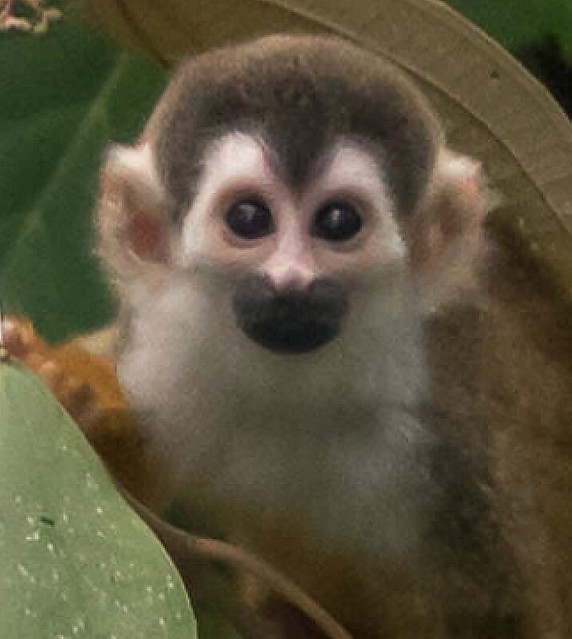
Pez remo. Y el primo del primate:
Cool! pic.twitter.com/sq8EOlj1yW
— Marketmule24 (@alistair_d63173) March 16, 2025

Pez remo. Y el primo del primate:
Cool! pic.twitter.com/sq8EOlj1yW
— Marketmule24 (@alistair_d63173) March 16, 2025

Conférence de Catherine Hobaiter (University of St Andrews - Scotland) dans le cadre du Colloquium du département d'Etudes Cognitives de l'ENS-PSL.
Language is the most powerful social tool any species has evolved - we can use it to share any idea we can think of with the minds of those around us: from poetry, Shakespeare, and physics, to internet memes it underpins what defines us as a species. But despite centuries of thought and study we still have very little idea of how and why language evolved. As a field primatologist at the University of St Andrews, I have spent 15 years living and working with wild apes in the rainforests and mountains of Uganda. Using our studies of ape communication and minds, I will trace the different ways we've tried to ask questions about the uniqueness - or not - of human language.
Voir https://savoirs.ens.fr/expose.php?id=3956
—oOo—
Un interesantísimo artículo de José Miguel Martínez Gázquez en Der Golem sobre la evolución del ojo y la mirada:
Al que le pongo este comentario:
Quite interesting. Congratulations admirativas, etc. Y una cuestión complementaria: El ojo produce un efecto especial en otro ojo, la mirada un efecto especial de sobresalto en otra mirada. Especialmente, creo, en contextos que requieren una interacción rápida (cazador / presa, interacciones sociales, y otros quizá). Habría que seguir en este efecto especial (quizá) la pista de las neuronas espejo: http://vanityfea.blogspot.com/2010/04/neuronas-espejo-y-vision-de-la-vision.html
—oOo—
#nuevopost vía @EvolPsychology— José Miguel Martínez Gázquez 🐚 (@jmmgazquez) July 15, 2020
Cognición Social (3). ¿Por quién doblan las campanas?
¿Es el lenguaje producto de la intencionalidad colectiva? ¿Lo son ambos del razonamiento causal?https://t.co/cAntVl9kC4
"La interacción de tocar la campana, desde que se inicia en uno de ellos hasta que concluye en otro, implica una interacción en bucle que permite establecer una mayor complejidad que el acto de actuar, sino quién actúa con qué y por qué yo le sigo o me percibo como competencia."