From
The Oxford Companion to English Literature, ed. Margaret
Drabble:

MARVELL, Andrew (1621-1678), son of the Revd Andrew Marvell,
born at Winstead in Holderness, Yorkshire. in 1624 the family moved to
Hull on his father's appointment as lecturer at Holy Trinity Church.
Marvell attended Hull Grammar School. He matriculated at Trinity
College, Cambridge, as a sizar in De. 1633, and graduated in 1639. In
1637 he had contributed Greek and Latin verses to a Cambridge volume
congratulating Charles I on the birth of a daughter. His mother died in
Apr. 1638, his father remarrying in November. Around 1639 Marvell may
have come under the influence of Roman Catholic proselytizers:
according to one story he went to London with them and was fetched back
by his father. In January 1641 his father was drowned while crossing
the Humber, and soon after Marvell left Cambridge for London. Between
1643 and 1647 he travelled for four years in Holland, France, Italy,
and Spain, learning languages and fencing, and perhaps deliberately
avoiding the Civil War (he said later that 'the Cause was too good to
have been fought for'). On his return from the Continent he apparently
moved in London literary circles and had friends among Royalists. His
poems to Lovelace ('his Noble Friend') and on the death of Lord
Hastings were published in 1649. In the early summer of 1650 he wrote
'An Horatian Ode upon Cromwell's Return from Ireland', perhaps the
greatest political poem in English.
From 1650 to 1652 Marvell tutored young Mary Fairfax, daughter of the
Parliamentarian general, at Nun Appleton in Yorkshire. In this period,
it is usually assumed, he wrote 'Upon Appleton House' and lyrics such
as 'The Garden' and the Mower Poems. In 1653 he was appointed tutor to
Cromwell's ward William Dutton, and moved to John Oxenbridge's house at
Eton, where he probably wrote 'Bermudas'. In 1654 with 'The First
Anniversary' (published 1655) he began his career as unofficial
laureate to Cromwell, and was appointed in 1657 Latin secretary to the
council of state (a post previouly occupied by his friend and sponsor
John Milton, now blind). For eight months during 1656 Marvell was in
Saumur with Dutton, where he was described as 'a notable English
Italo-Machiavellian'. He mourned Cromwell in 'Upon the Death of His
Late Highness the Lord Protector' (1658) and took part in the funeral
procession. The following year (January) he was elected MP for Hull,
and remained one of the Hull members until his death. At the
Restoration his influence secured Milton's release from prison.
From June 1662 to April 1663 Marvell was in Holland on unknown
political business, and in July 1663 he travelled with the earl of
Carlisle as private secretary on his embassy to Russia, Sweden, and
Denmark, returning in January 1665. His satires against Clarendon were
written and published in 1667. Later that year he composed his finest
satire 'Last Instructions to a Painter', attacking financial and sexual
corruption at court and in Parliament, and took part in the impeachment
of Clarendon. The Rehearsal Transpros'd,
a controversial mock-biblical prose work advocating toleration for
Dissenters, which set new standards of irony and urbanity, appeared in
1672 (Pt II, 1673). Gilbert Burnet called these 'the wittiest books
that have appeared in this age', and Charles II apparently read them
'over and over again'. According to the report of government spies,
Marvell (under the codename 'Mr Thomas') was during 1674 a member
of a fifth column promoting Dutch interests in England, and in touch
with Dutch secret agents. The second edition of Paradise Lost
contained a commendatory poem by Marvell, and in his prose works he
continued to wage war against arbitrary royal power. Mr Smirk, or
The Divine in Mode and A Short Historical Essay Concerning
General Councils (1676), and An Account of the Growth of Popery
and Arbitrary Government in England (1677), were all Marvell's
though prudently published anonymously. The London Gazette
offered a reward, in Mar. 1678, for information about the author or
printer of An Account.
That August, however, Marvell died in his house in Great Russell Street
from medical treatment prescribed for a tertian ague. His Miscellaneous
Poems appeared in 1681. His Miscellaneous Poems
appeared in 1681, printed from papers found in his rooms by his
housekeeper Mary Palmer, who gave herself out to be his widow and
signed the preface 'Mary Marvell' in order to get her hands on £500
which Marvell had been keeping for two bankrupt friends. This volume
did not contain the satires (the authorship of some of which is still
disputed): these appeared in Poems on Affairs of State (1689-97).
Famed in his day as patriot, satirist, and foe to tyranny, Marvell was
virtually unknown as a lyric poet. C. Lamb started a gradual revival,
but Marvell's poems were more appreciated in 19th-cent. America than in
England. It was not until after the First World War, with Grierson's
Metaphysical Lyrics
and T. S. Eliot's 'Andrew Marvell', that the modern high estimation of
his poetry began to prevail. In the second half of the 20th century his
small body of lyrics was subjected to more exegetical effort than the
work of any other metaphysical poet. His oblique and finally enigmatic
way of treating what are often quite conventional materials (as in 'The
Nymph Complaining for the Death of Her Faun' or 'To His Coy Mistress')
has especially intrigued the modern mind.
Poems and Letters, ed. H. M. Margoliouth, 3rd edn rev. P.
Legouis and E. E. Duncan-Jones (2 vols, 1971);
Latin Poems, ed.
and trans. W. A. McQueen and K. A. Rockwell (1964)
, The Rehearsal
Transpros'd, ed. D. E. B. Smith (1971); P. Legouis,
Andrew
Marvell: Poet, Puritan, Patriot (2nd edn, 1968); H. Kelliher,
Andrew
Marvell: Poet and Politician (1978); J. B. Leishman,
The Art of
Marvell's Poetry (1966).
—oOo—
From
A History of English Literature, by Émile Legouis and Louis
Cazamian (1926-1937)
The End of the Renascence, 1625-1660 — 6.
Puritan poetry. Marvell.
The Puritans also had their songsters, who, while they were
less numerous than those of the other party, included one of the most
endearing and another, much the greatest of the poets of the
century—Marvell and Milton.
It is impossible not to place among the Puritans Andrew Marvell
(1621-78) (1), who, under the Commonwealth was tutor to the daughter of
Lord Fairfax, the great Parliamentary general, and who subsequently was
Milton's friend and with him secretary to the Privy Council. He was the
most inspired and affectionate of Cromwell's panegyrists, and after the
Restoration he carried on in verse and prose the struggle for religious
and political liberty. Yet it must be recognized that no one could be
less like than Marvell to the conventional harsh and gloomy Puritan,
the enemy of all worldly and artistic amusement, for ever mouthing
verses of the Old Testament in order to denounce the sins of the world.
This figure is dispelled as we look at Hanneman's portrait
of Marvell, a man thirty-seven years old, with brilliant, living eyes,
a laughing, mocking mouth and a calm brow, or as we read the verses
which the poet wrote in his thirtieth year, alight, as they are, with
human love and feeling for nature. Even in the poems of his maturity
and in his pamphleteer's prose the gaiety is apparent of a jovial and
mirth-loving spirit. On the whole, religion has far less place in
Marvell's verses than in those of the Anglicans we have just
considered. While he wrote many verses which witness to the sincerity
of his faith, he made both more numerous and finer poems filled with
the joyous humanism and the cordial, vital quality which prove him a
son of the Renascence. Undoubtedly he revered the Bible; but he also
loved wine, women, and song.
He wrote his essentially poetic works at Nunappleton, Lord Fairfax's
country-seat, where he lived from 1650 to 1652. He is inspired by the
country, but not, like earlier poets, by the country seen in accordance
with the pastoral convention. The desire for a more precise, for a
local poetry, was already making itself felt, and one of the first
poems which fulfilled it was John Denham's Cooper's Hill. But while a
landscape was to Denham no more than the starting-point for historical
and moral reflections, Marvell indulged far more fully in the happy
contemplation of natural scenery. Before him only Wither had expressed,
amid much rubbish, the intimate enjoyment he drew from fields and
woods. Marvell spontaneously returned to this theme which was to be so
dear to the Lake poets. He is very Wordsworthian in Upon the Hill and Grove at Billborough,
in which he describes a sort of natural terrace whither Fairfax, after
his retirement, was wont to resort in search o quiet and of a
meditative mood.
Marvell relates his own feelings in the longest of his poems, Upon Appleton House, in which he
shows that he is familiar with the aspects of the country and its trees
and birds, and that he had studied and compared the songs of birds. He
anticipates Wordsworth in preferring the song of the dove to that of
the nightingale. As he walks, he can
... through the hazels
thick espy
The hatching throstle's shining eye,
and watch the woodpecker at work. He almost identifies himself with the
birds and growing things:
Thus I, easy
philosopher,
Among the birds and trees confer;
And little now to make me wants
Or of the fowls, or of the plants.
He has dialogues with the singing birds. The leaves trembling in the
wind are to him Sibyl's leaves:
What Rome, Greece,
Palestine, ere said,
I in this light mosaic read.
Thrice happy he who, not mistook,
Hath read in Nature's mystic book.
To be covered with leaves is a delight to him:
Under this antic cope
I move,
Like some great prelate of the grove.
He calls upon the leafy shoots to cling to him:
Bind me, ye woodbines,
in your twines,
Curl me about, ye gadding vines.
This is the exalted love for nature of a romantic, but a hint of
strangeness and of Elizabethan pedantry are mingled with it.
Marvell's feeling for animals, his suffering when they suffer, is
voiced with infinite gracefulness in his semi-mythological poem, The Nymph complaining for the Death of
her Fawn.
He was the first to sing the beauty and glory of gardens and orchards.
In them he tastes his dearest delights: it seems to him that all
creation is
Annihilating all
that's made
To a green thought in a green shade.
Marvell's Garden foreshadows
Keats by its sensuousness, and Wordsworth by its optimistic and
serenely meditative mood.
Yet he preferred wild to cultivated nature. It is in the spirit of
charming Perdita in The Winter's Tale
that, in The Mower against Gardens,
he protests against artificial gardening processes—grafting, budding,
and selection.
The feeling for nature which, in the poems we have mentioned, is
expressed in its pure state, is readily introduced into poems which are
otherwise inspired, by Christianity or by love, nowhere better than in
the famous song of the emigrants in Bermuda. Here Marvell imagines that
he hears a Puritan refugee from the Stuart tyranny singing praises to
God as he rows along the coast of an island in the Bermudas, 'safe from
the storms' and prelates' rage':
He hangs in shades the orange
bright
Like golden lamps in a green night,
And does in the pomegranates close
Jewels more rich than Ormus shows.
Sometimes Marvell returns to the pastoral, but he gives it a new
emphasis of truth, even of realism. The short idyll Ametas and Thestylis making Hay-ropes
is very original and gracerul, and there is also the touching complaint
of Damon the Mower, who,
working beneath a burning sun, laments his Juliana's hardness of heart.
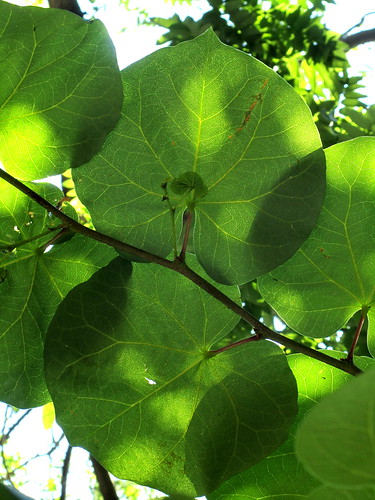 Love
poems are not numerous in Marvell's work, but among several which
are graceful (The Gallery) or
slightly ironical—denouncing women's tricks, artifices, and coquetry (Mourning, Daphnis and Chloe)—a few
hold us by their passion. His lines To
his Coy Mistress have Donne's strength and passion without his
obscurity or bad taste, and run easily and harmoniously. They are the
masterpiece of metaphysical poetry in this genre, and they also show a return
to the anacreontic theme, 'Gather ye rosebuds while ye may.' But it is
repeated with a new intensity. It issues from a heart truly deep and
passionate, and the love which is demanded is silent and forceful:
Love
poems are not numerous in Marvell's work, but among several which
are graceful (The Gallery) or
slightly ironical—denouncing women's tricks, artifices, and coquetry (Mourning, Daphnis and Chloe)—a few
hold us by their passion. His lines To
his Coy Mistress have Donne's strength and passion without his
obscurity or bad taste, and run easily and harmoniously. They are the
masterpiece of metaphysical poetry in this genre, and they also show a return
to the anacreontic theme, 'Gather ye rosebuds while ye may.' But it is
repeated with a new intensity. It issues from a heart truly deep and
passionate, and the love which is demanded is silent and forceful:
Now let us sport us while we may,
And now, like am'rous birds of prey,
Rather at once our time devour,
Than languish in his slow-chapt pow'r.
Let us roll all our strength and all
Our sweetness up into one ball,
And tear our pleasures with rough strife
Thorough the iron gates of life.
Thus, though we cannot make our sun
Stand still, yet we will make him run.
These lines are the very essence of the poetry of Marvell, that
strange, sensuous, passionate Puritan. He had, however, another vein.
He was an ardent patriot and patriotism rather than piety may be said
to have dictated his verses on Cromwell's protectorate and death. It is
the dominant note of his Horatian
Ode upon Cromwell's Return from Ireland [1650], First Anniversary of the Government under
His Highness the Lord Protector (1655), and Poem upon the Death of His late Highness
the Lord Protector.
A sort of competition of poets, in which such as Waller and Dryden took
part, was provoked by the great man's death, and Marvell carried off
its prize because in his verses the man speaks through the poet. They
are penetrated with emotion. Better than the others, Marvell gives the
impression of the greatness of him he sang and the immensity of the
loss his death occasioned.
After the Restoration Marvell pursued only the art of satire, in prose
and verse, and this phrase of his accomplishment is better studied
elsewhere. We have said enough to show how far he was original as a
pure poet. Nature endowed him richly: his sincerity and straightness of
vision sufficed to raise the metaphysical school, to which he belonged,
from its state of decline, and to bring it back from extravagance to
reason without alienating fancy. In the history of the feeling for
nature his place is considerable. He expressed himself with liveliness
and happy audacity. But he paid too little regard to versification. His
lyrical work is written almost entirely in rhymed eight-syllabled
couplets, a pleasant metre, but one so easy that it tempts to
carelessness. In the formation of his stanzas, Marvell shows himself
one of the least varied and inventive poets of his time. To rank among
the greatest, he should have had a more exacting standard of art, and
perhaps a more whole-hearted devotion to poetry, as well as those
supreme qualities of mastery of the word and the line which are the
glory of the other Puritan poet, John Milton.
Satire and the Satiric Spirit
— 3. Political Satire: Marvell, Oldham.—
Under the Restoration the domain of political satire is vast and
crowded, and only the scholar can explore all its corners. Great names,
brilliant or powerful works stand out above a multitude of pamphlets
and invectives, which in the most varied forms express one and the same
fund of virulent enmity; where intense words fail to give any artistic
relief to the monotony of these outporings of hatred.
It is the art of the satirist which alone counts here. The
contemporaries, struck by the wealth of this production, have gathered
from it the collections entitled Poems
on Affairs of State,
in which satires are intermixed with pieces of different characters,
and of unequal interest. Among their very diverse themes, there are
heard the outburst of a vigorous impassioned inspiration, that of a
seething anger against the absolutist and Catholic tendencies of the
Stuarts. All the genius of a Dryden, thrown on the side of the
monarchy, cannot prevent the confused instinct of an irritated people
from voicing itself in even louder tones; and another writer—Andrew
Marvell—from lending a poetical expression to this instinct.
Marvell belongs to the preceding age of English literature. (1 bis [see
above]). A belated survivor like Milton, he preserves in the midst of
the children of Belial the forceful energy of a character that has been
tempered by Puritanism. His satires, by virtue of the definite
occasion which called them into existence, are part and parcel of the
Restoration and must be connected with it.
This occasion brings together three poets of the transition in which
the new literature develops from the old. Waller (2), a courtier poet
at heart, had celebrated an English naval victory, and attributed its
triumph to the reigning dynasty (Instructions to a Painter,
1665); Sir John Denham (3) had inveighed against this adulation in
lines of greater manliness (Directions
to a Painter,
1667, 1671, 1674). Sparing at first the king's person—for he knows how
to bend the stiffness of his principles, and is not above tactics of
caution—then abandoning all reserve, he [Marvell] launches until his
death (1678) a series of attacks against the foreign policy of the
king, and the scandals of public life of the court. Unable to disclose
his identity, he has to circulate these pamphlets anonymously, either
in manuscript form or in loose sheets, and to hide his main purpose
under the veil of allegories. But the personality of the author reveals
itself in most cases, and the pulsating ardour of his feeling shines
out through all disguises ([The Last
Instructions to a Painter], Britannia
and Raleigh, Dialogue between Two Horses,
etc.). In a language of extraordinary raciness, and a popular tone,
with a raw realistic touch, the rage and shame of an England that has
been humiliated, enslaved, and contaminated by foreign vices and
fashions are here expressed. Such feelings were still exceptional, but
their contagious influence was spreading obscurely. As if the new
spirit in poetry supplied him with his instrument of expression,
Marvell writes most often in heroic couplets; but his unpolished verse,
capable of surprising vigour, has not the necessary suppleness or
regularity and rather reminds one at times of the simple ballad
rhythms. The irresistible virtue of a lofty soul, of a heart
embittered but obsessed by noble regrets and high thoughts,
nevertheless imbues these strange poems with an energy of movement and
phrase, with an eloquence, that make them one of the most eminent
examples of English political satire.
________
(1). Complete Works in Prose and
Verse, ed. Grosart, 4 vols. (1872-5); Poems and Satires, ed. Aitken in 2
vols. (1892) and in 1 vol. for the Muses' Library (1898). See A.
Birrell, Andrew Marvell (English
Men of Letters Series, 1905).
(1 bis). (...) Poems and Letters,
ed. by H. M. Margoliouth, 1927; P. Legouis, André Marvell, etc., 1928. There
would seem to be serious doubt as to the authenticity of several among
the satires attributed to Marvell.
(2). Edmund Waller (1606-87): Poems,
ed. by Drury, 1893. See Part I.
(3). Sir John Denham (1615-69): Poems,
Chalmers, vol. vii. See Part I.
—oOo—


